Hi, I'm Javier Huang rocket_launch
I am a dedicated and experienced Software, Data, and AI/ML Engineer
Scroll down to see my work!
About Me
I am an undergraduate student in the University of Toronto Computer Engineering program, focusing on Software Engineering, Data Science, and Artificial Intelligence. I have over five years of hands-on experience in building industry applications at the intersection of software engineering and AI/ML, with strong expertise in computer science and engineering principles. My work focuses on building systems that are scalable, reliable, and intelligent to solve complex problems across diverse domains and deliver measurable impact. I thrive in both team settings and independent projects, continuously learning new technologies and building robust, effective solutions.
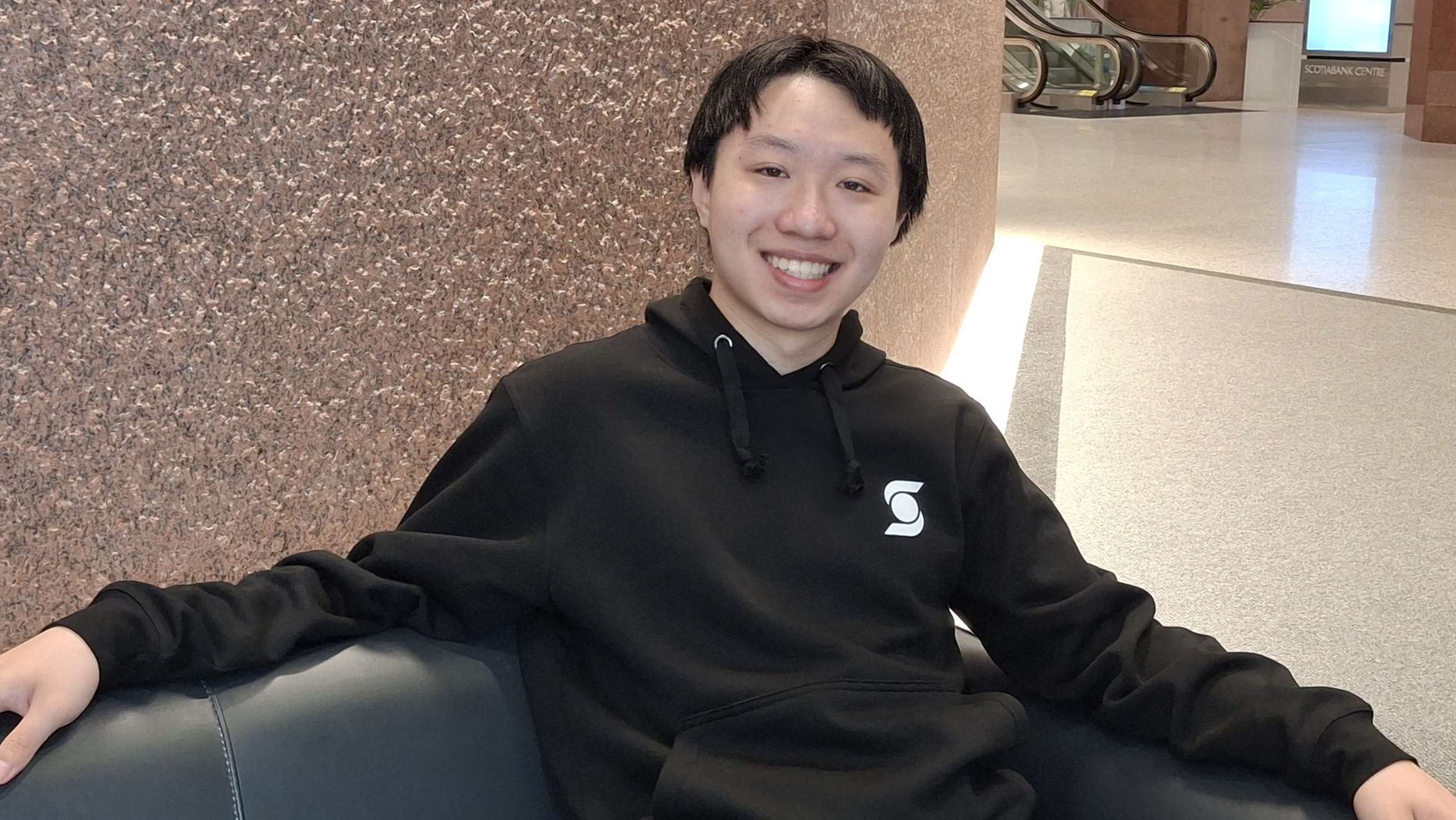
Work and professional experiences I've had throughout my career.
10 experiences
Featured Experience

Research Assistant
- Conducting quantitative economics and finance research using Python, R, and C++, applying statistical and economic modeling to quantify and predict the economic impacts of licensing agreements.
- Building a large-scale licensing dataset using SQL, Python, SLURM, and local LLMs, applying NLP and ML classification to extract economic and financial indicators while optimizing pipelines under compute and latency constraints.

Data Platform Engineer Intern
- Enhanced the Event Exchange self-serve portal used by 150+ bank-wide applications for Kafka resource discovery and management.
- Built a reporting and governance platform for a Kafka ecosystem processing 6B+ messages and 1TB+ data monthly, applying statistical modeling to analyze and forecast usage trends and platform costs.
- Automated data pipelines and developed interactive Power BI reports using platform APIs, PostgreSQL, and GCP, improving data accuracy by 12% and reducing report generation time by 60×.
- Developed reusable and scalable full-stack Backstage plugins using React and Node.js, enabling 5+ teams to build self-service workflows with GitHub Actions and Terraform.
- Built an AI-powered financial crime detection PoC using data streaming technologies (Kafka, Flink, Confluent Cloud) for real-time anomaly detection, alert enrichment, and case triage; presented to CTO, EVP, SVP, and VP-level leaders.
Data Science & ML Lead
- Led Team 33 in developing an interpretable Anti-Money Laundering (AML) platform analyzing risk-score distributions and anomalous behavior under extreme class imbalance; won 1st Place and a $15,000 prize among 430 competitors across 90+ teams, including PhD, Master's, and undergraduate students.
- Developed outlier detection ML models across 61k+ customers and 5.9M+ transactions using Python, scikit-learn, and imbalanced-learn, including Isolation Forest, One-Class SVM, and Local Outlier Factor.
- Expanded and optimized the initial 2-model framework into 16 models, including 14 transaction-specific models across 7 transaction types, identifying 6.5× more critical risk cases.
- Built explainable AML decision workflows combining SHAP, LIME, and LLM-generated explanations with regulatory knowledge sources including FINTRAC, FINCEN, and FLSC, improving transparency, auditability, and investigator confidence.
- Developed a full-stack investigation platform using Next.js and React to integrate anomaly detection results, AI-generated case explanations, and a knowledge library of AML red flags and suspicious activity patterns into a unified system.

Technical Project Lead
- Architected and delivered the MCP Gateway project, a production-grade orchestration layer enabling secure AI agent-to-MCP server communication. Defined system architecture, technical requirements, and Agile delivery milestones using Jira.
- Designed and developed a containerized AWS-hosted gateway using FastAPI and Docker, integrating 5 MCP servers (134 tools) across PostgreSQL, Slack, and Google Workspace; implemented JWT SSO authentication, RBAC, centralized PostgreSQL logging, and rate limiting.
- Built platform observability infrastructure using Prometheus, Grafana, and a custom React dashboard to monitor request traffic, server utilization, system health, and failures, enabling reliable multi-agent workflow execution through centralized tool access.

Software & Machine Learning Engineer
- Developed AuditMate, an AI-powered web and mobile platform for automating building energy audits at BuildingAssets. Performed data analysis and image preprocessing, and built backend APIs using FastAPI to support audit workflows.
- Integrated OpenRouter API with Google Gemini agents for computer vision-based fixture identification, manual retrieval, and energy improvement recommendations.
- Built Next.js and Flutter frontends, and deployed on AWS EC2, enabling both professional auditors and self-serve clients through automated and guided audit experiences.

Technology Director
- Organizer of GenAI Genesis 2026, Canada's largest AI hackathon, leading technology development for participant and judging platforms supporting 2,000+ applicants, 800+ hackers (30% YoY growth), 250+ projects, and 90+ judges; built and maintained platforms that facilitated 10,000+ interactions throughout the event.
- Engineered scalable full-stack infrastructure using Next.js, React, Supabase, and PostgreSQL, implementing secure REST APIs, Zod validation, database schemas, and role-based access control to support participant workflows and judging operations.
- Built and deployed automated CI/CD delivery pipelines using GitHub Actions and Vercel, improving release reliability and reduced release time by 35% through continuous integration and streamlined deployment workflows while achieving zero-downtime operations throughout the hackathon.
Explore my projects across three categories: AI & Machine Learning, Business & Education, and Online Web Games.
22 projects
Featured Projects
Market regime research for adaptive trading strategy selection

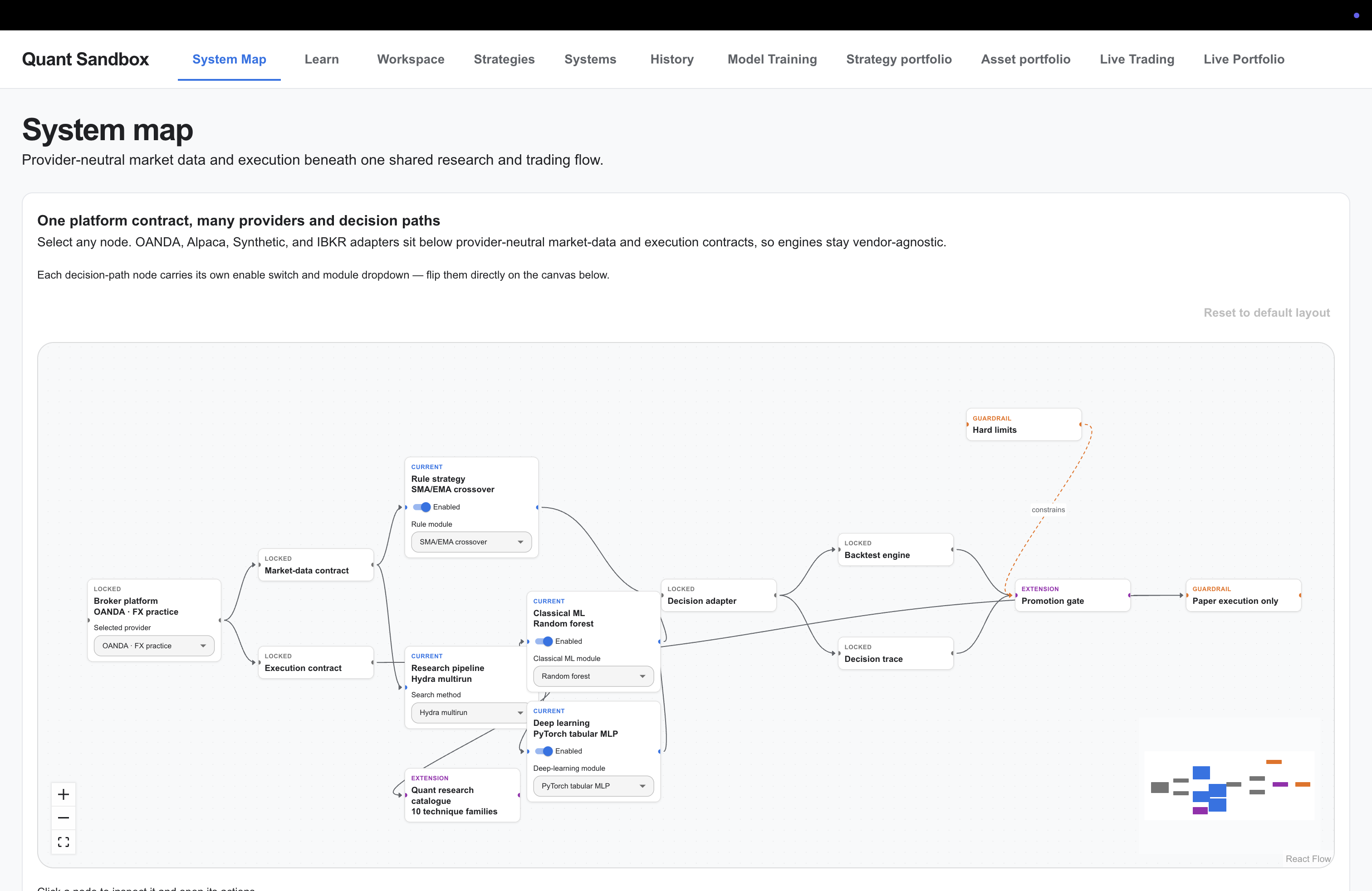
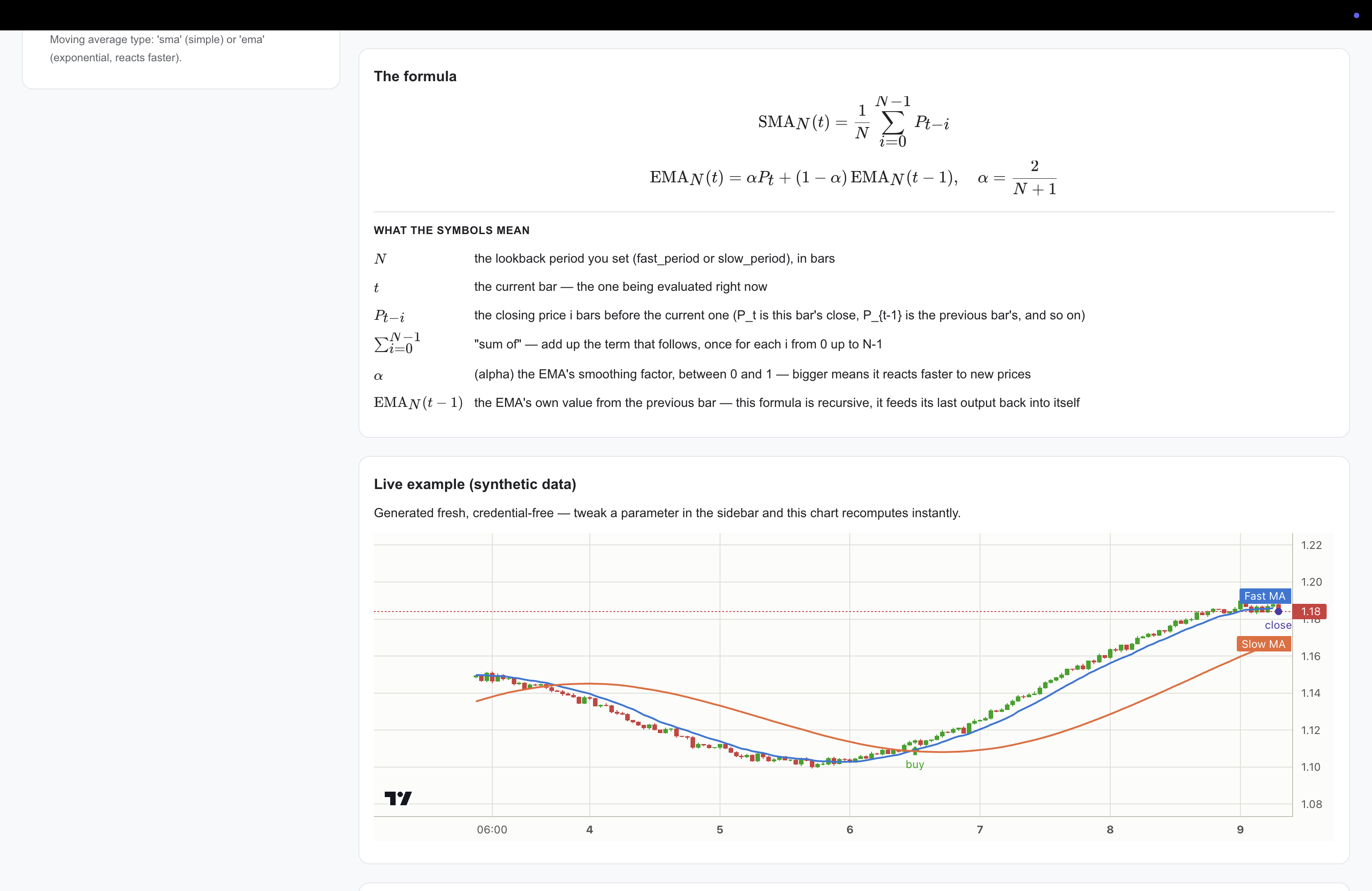
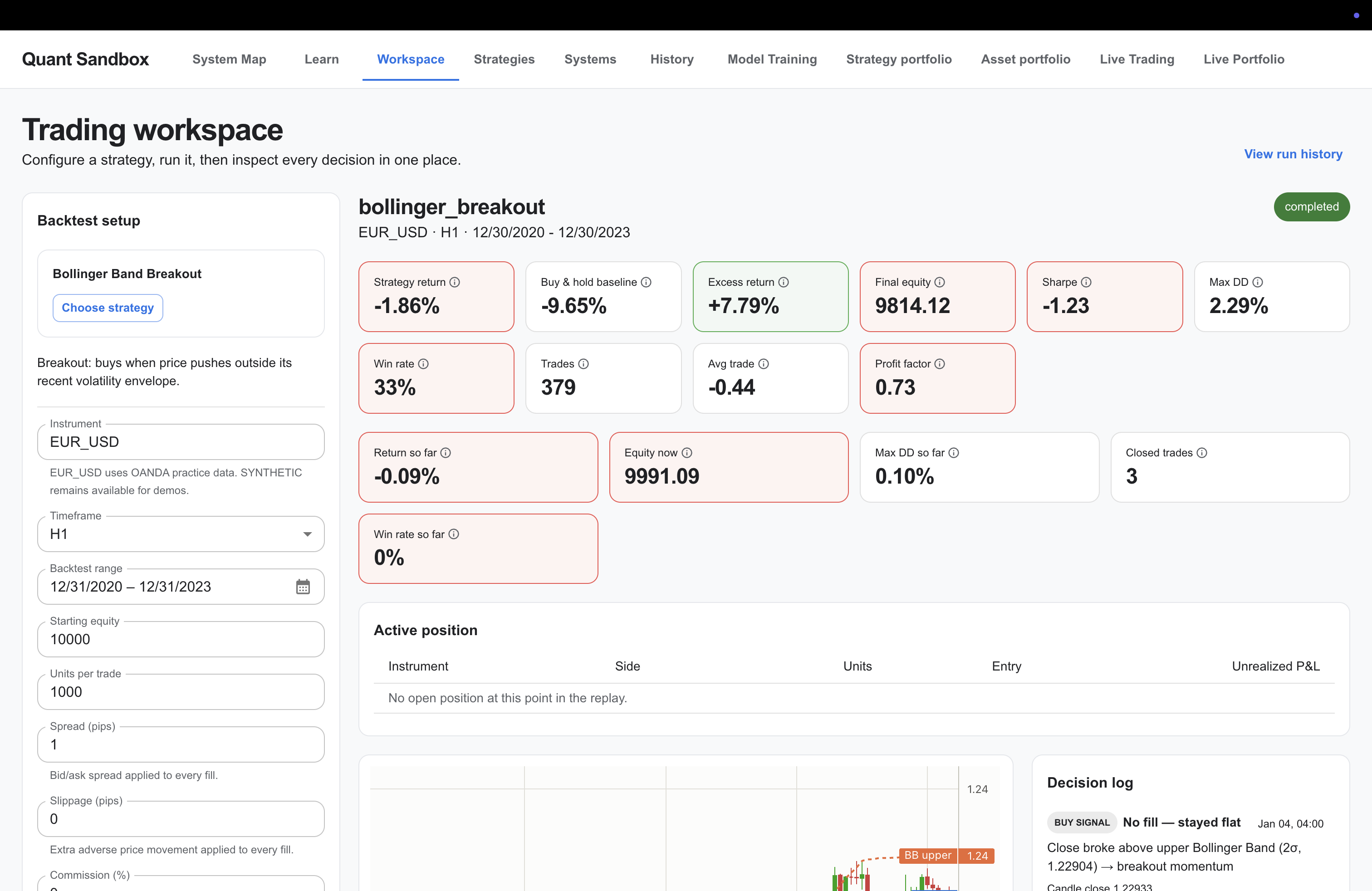
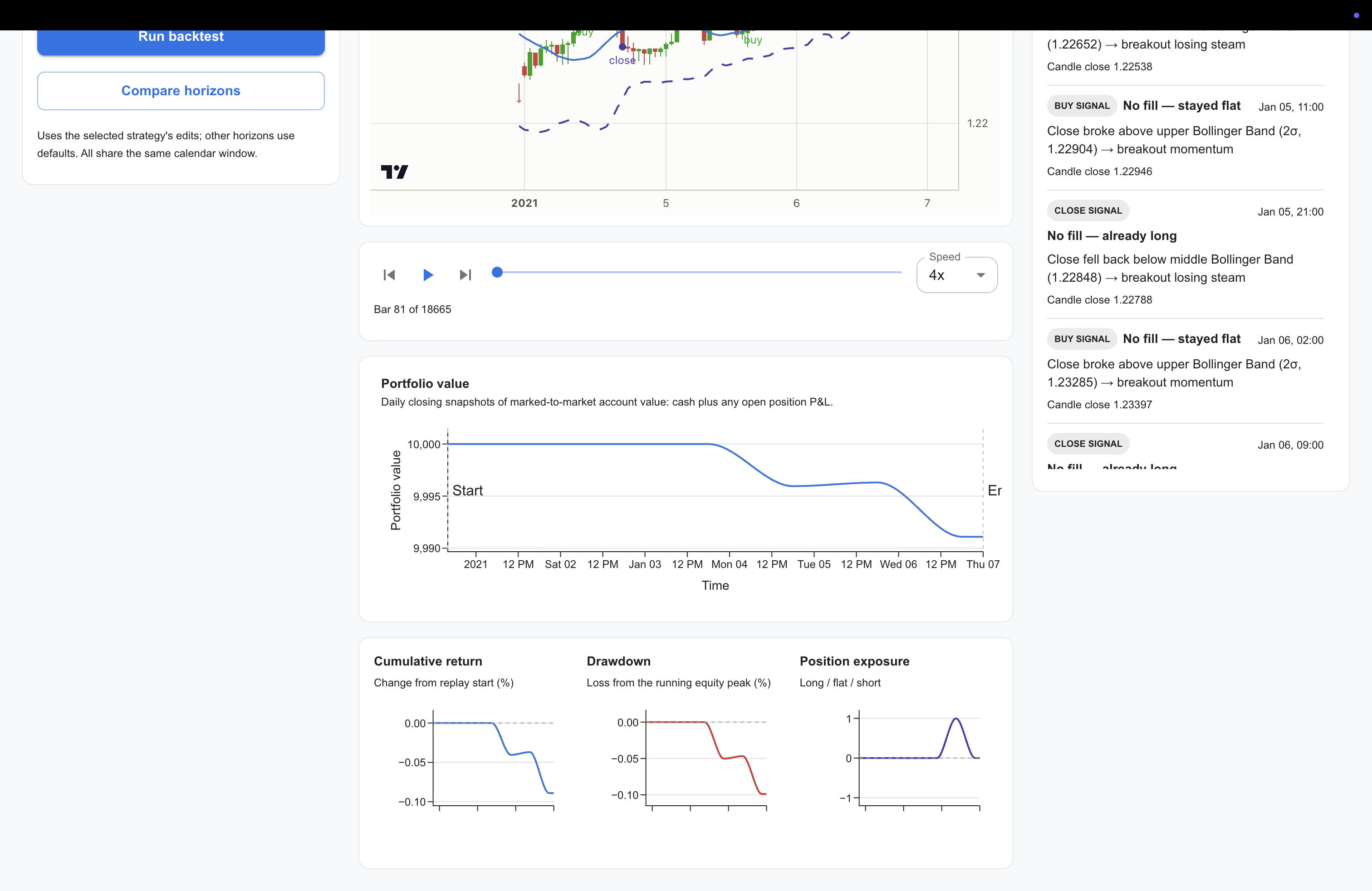
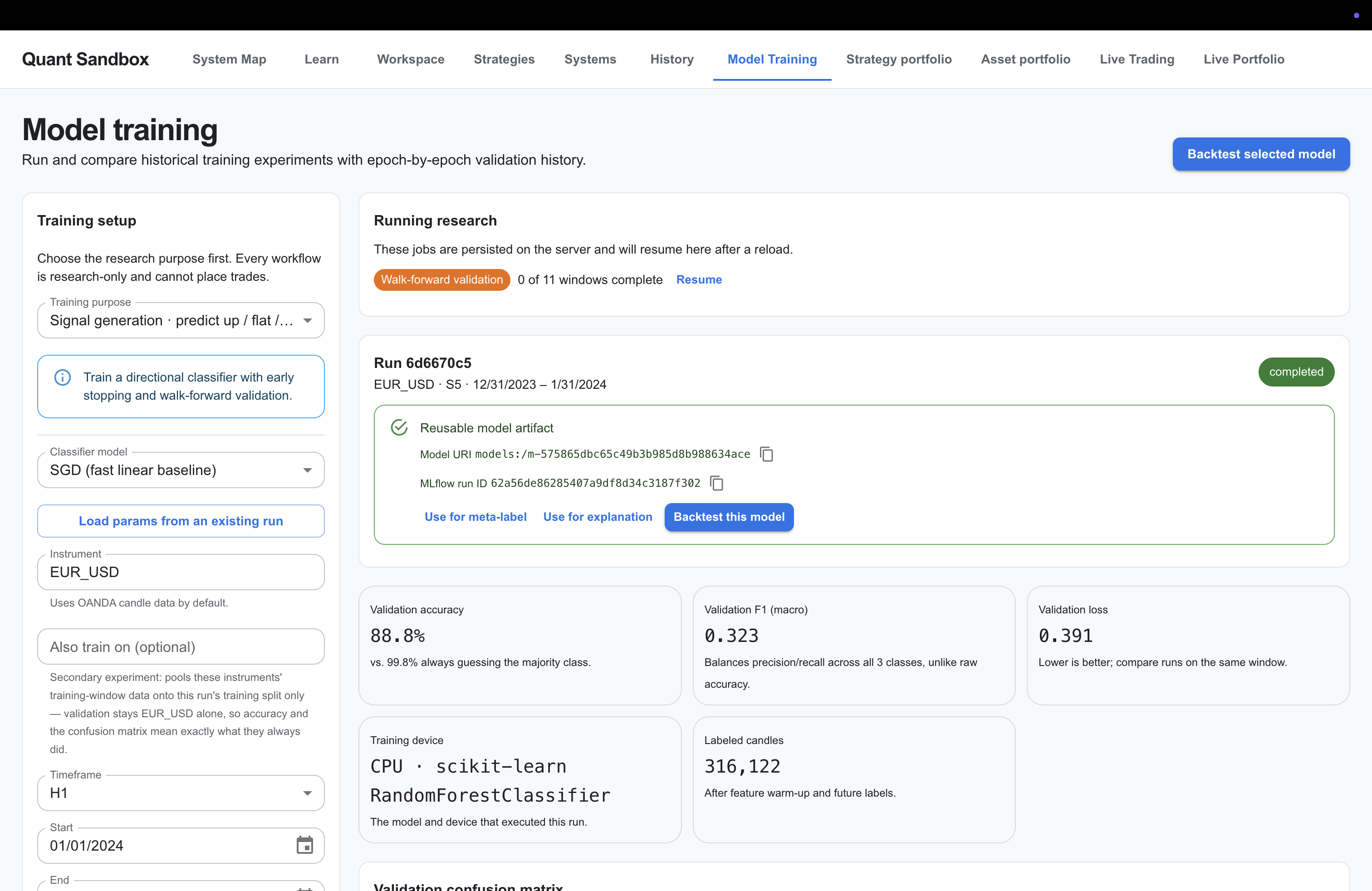
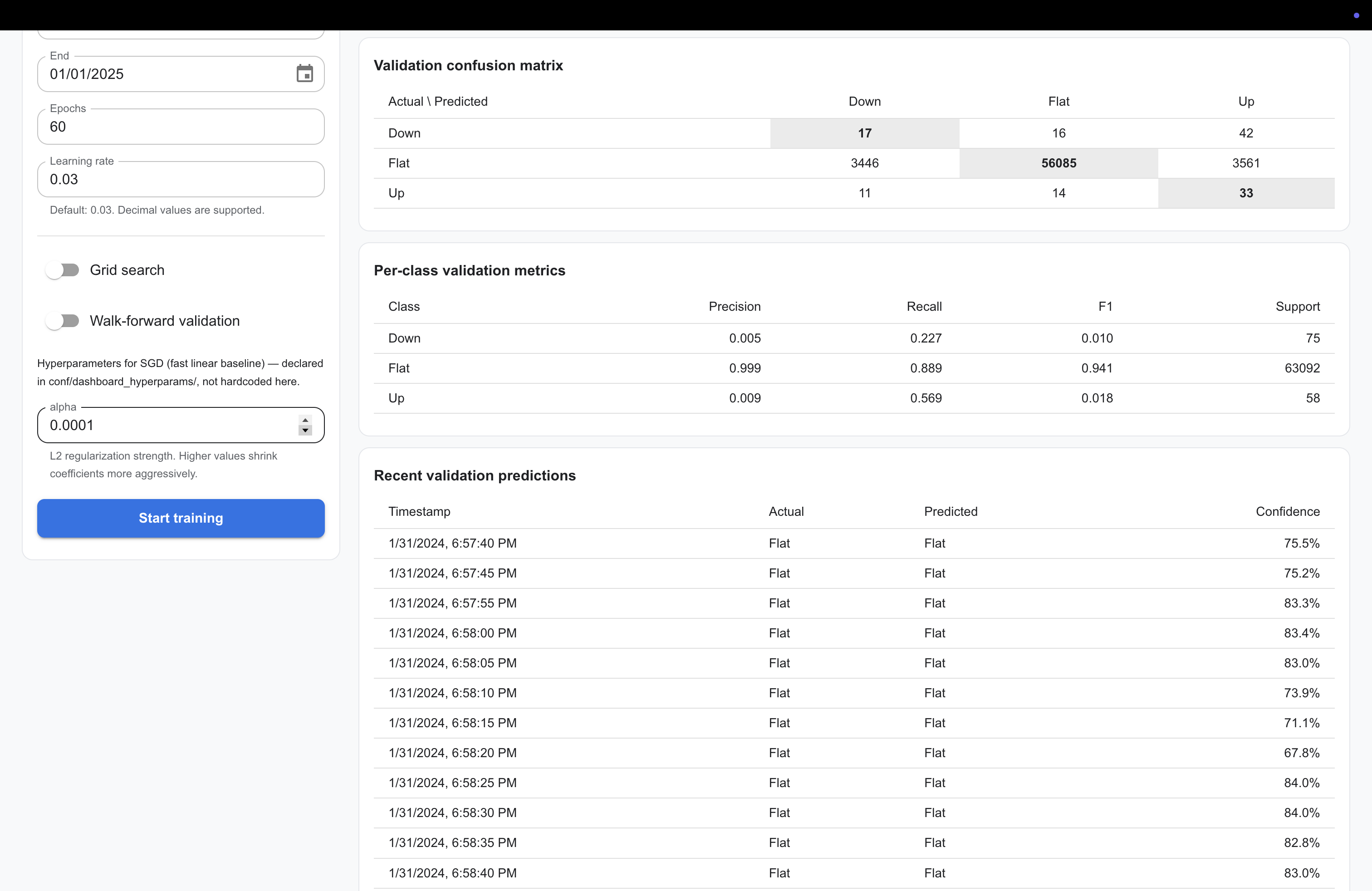
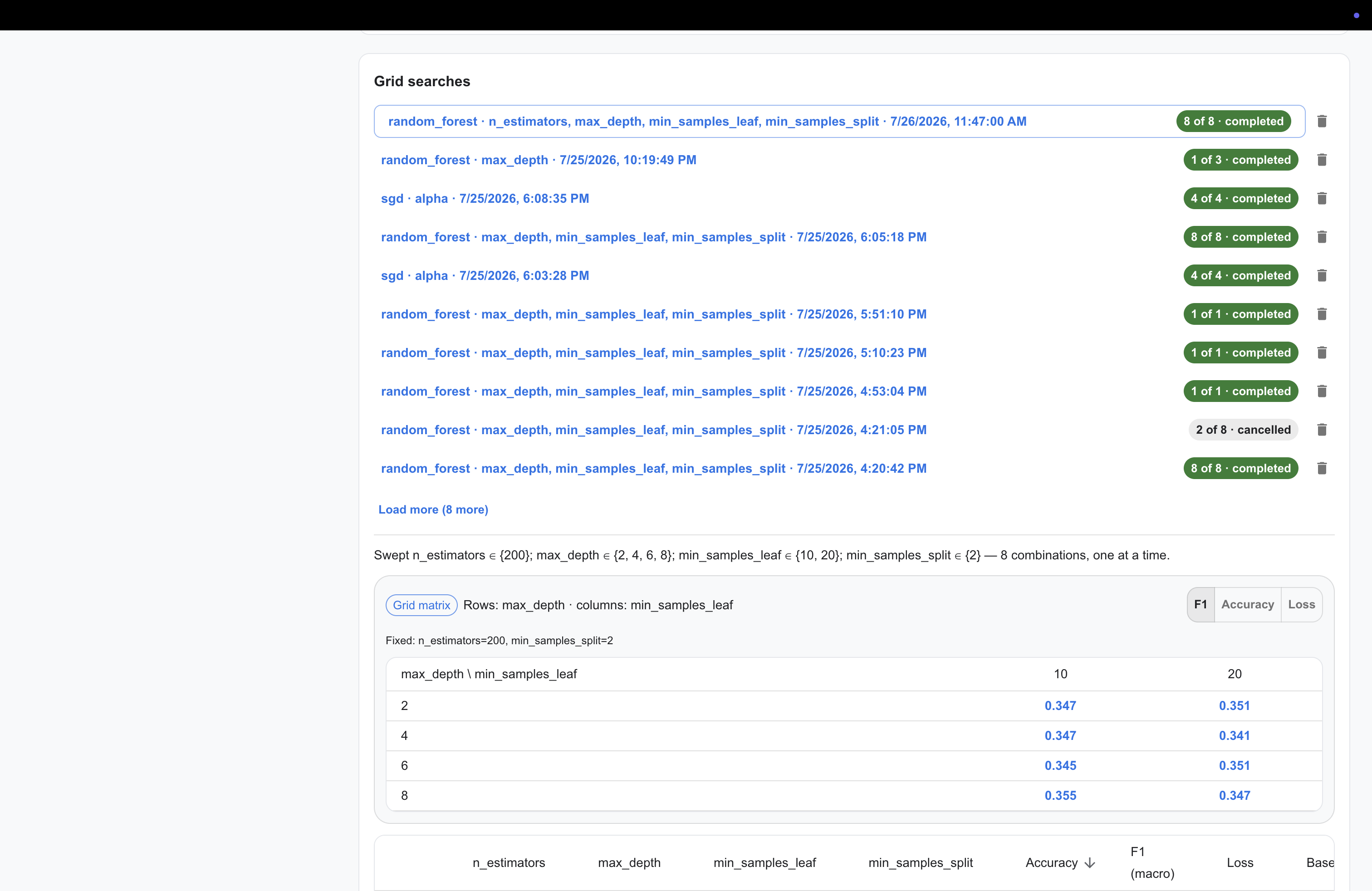
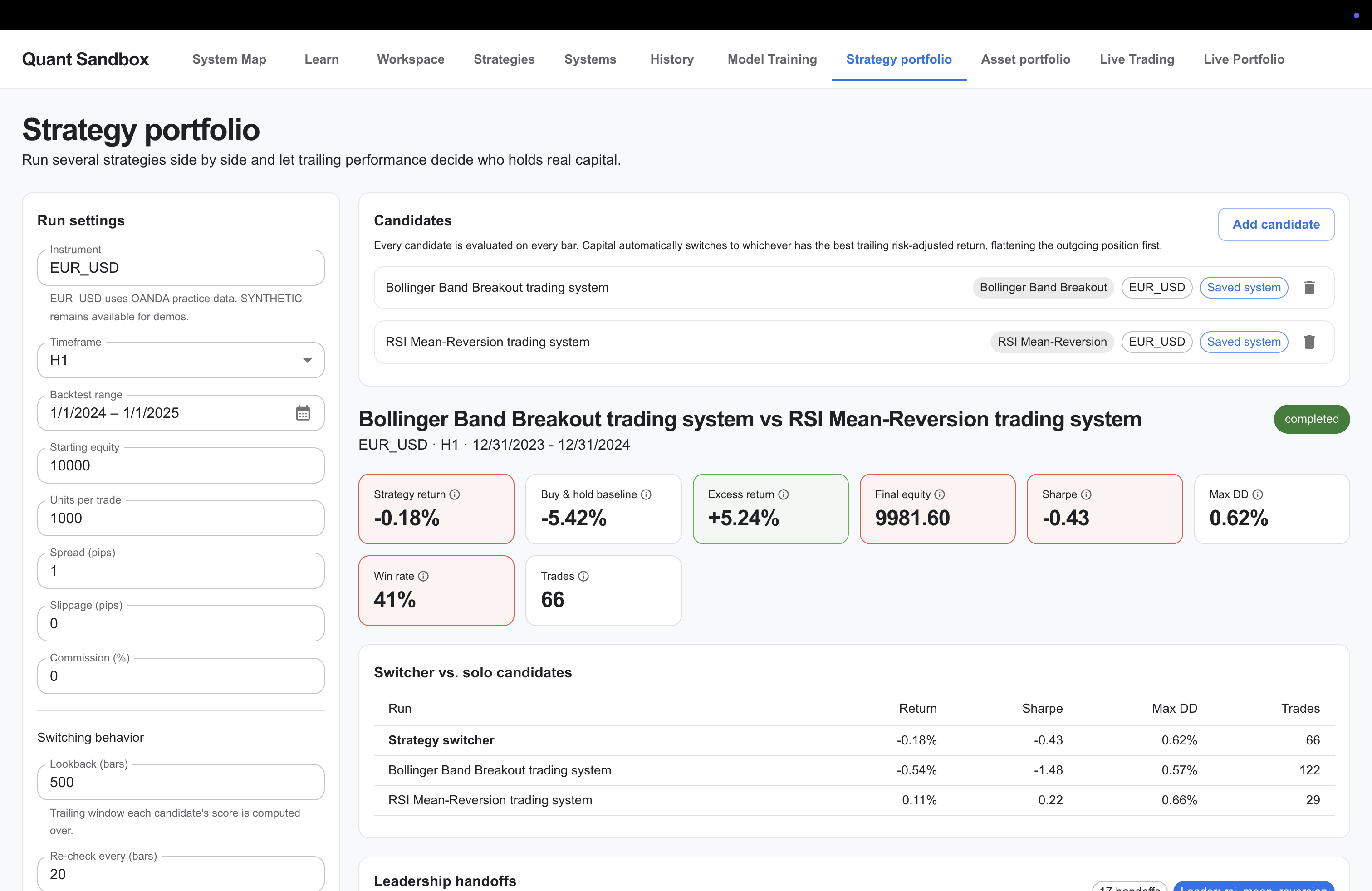
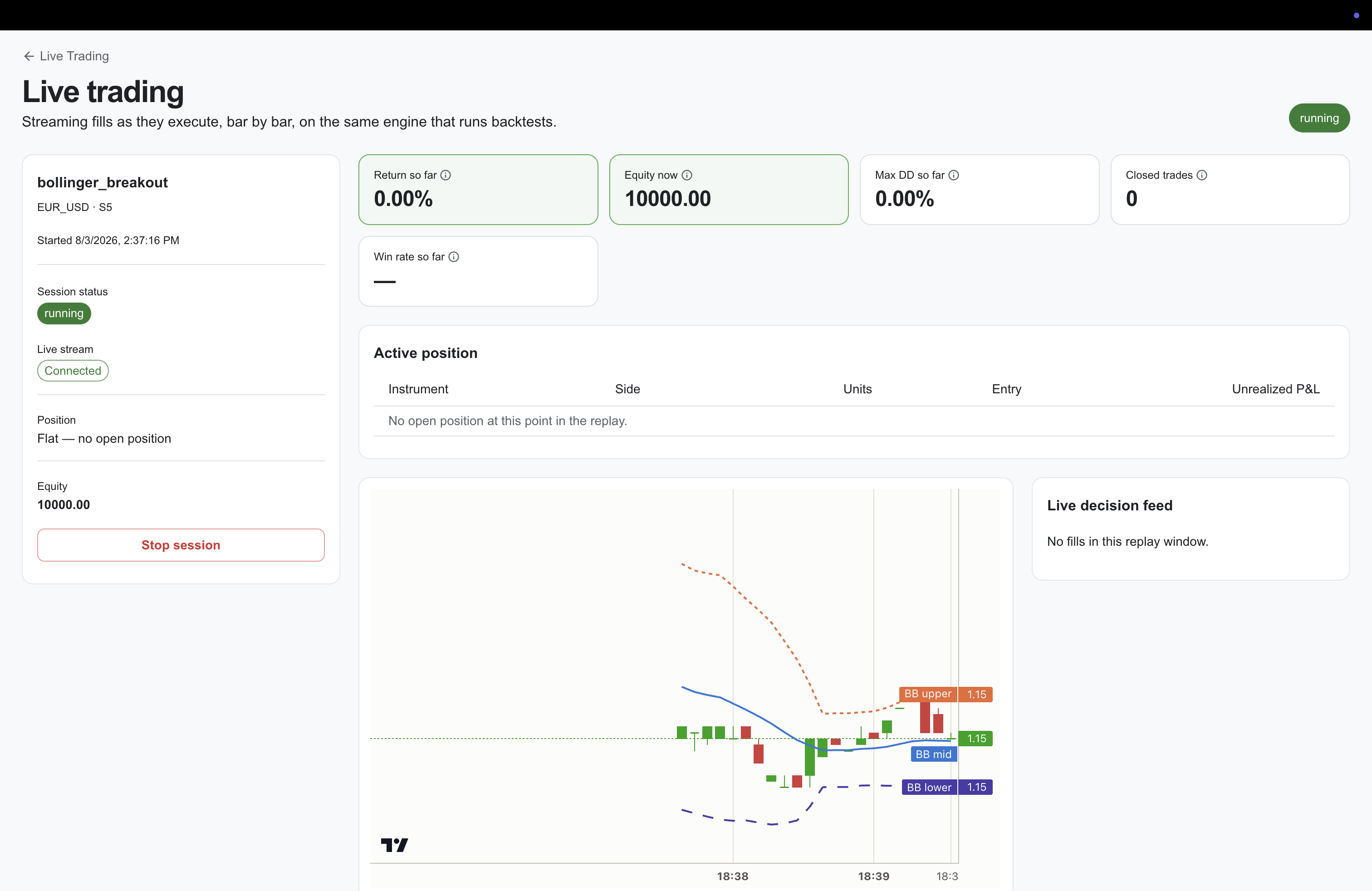
- Built a Python quantitative research platform to train, backtest, and rank 14+ momentum, mean-reversion, supervised machine learning, and reinforcement learning strategies across 5+ years of market data.
- Built a regime-aware strategy selection pipeline using market regime classification, grid search, walk-forward validation, and Hydra + MLflow to evaluate strategy performance across changing market conditions.
 Canopy: AI Course Generation & Mastery Platform
 OpenAI Build Week Hackathon, Top 20 Finalist
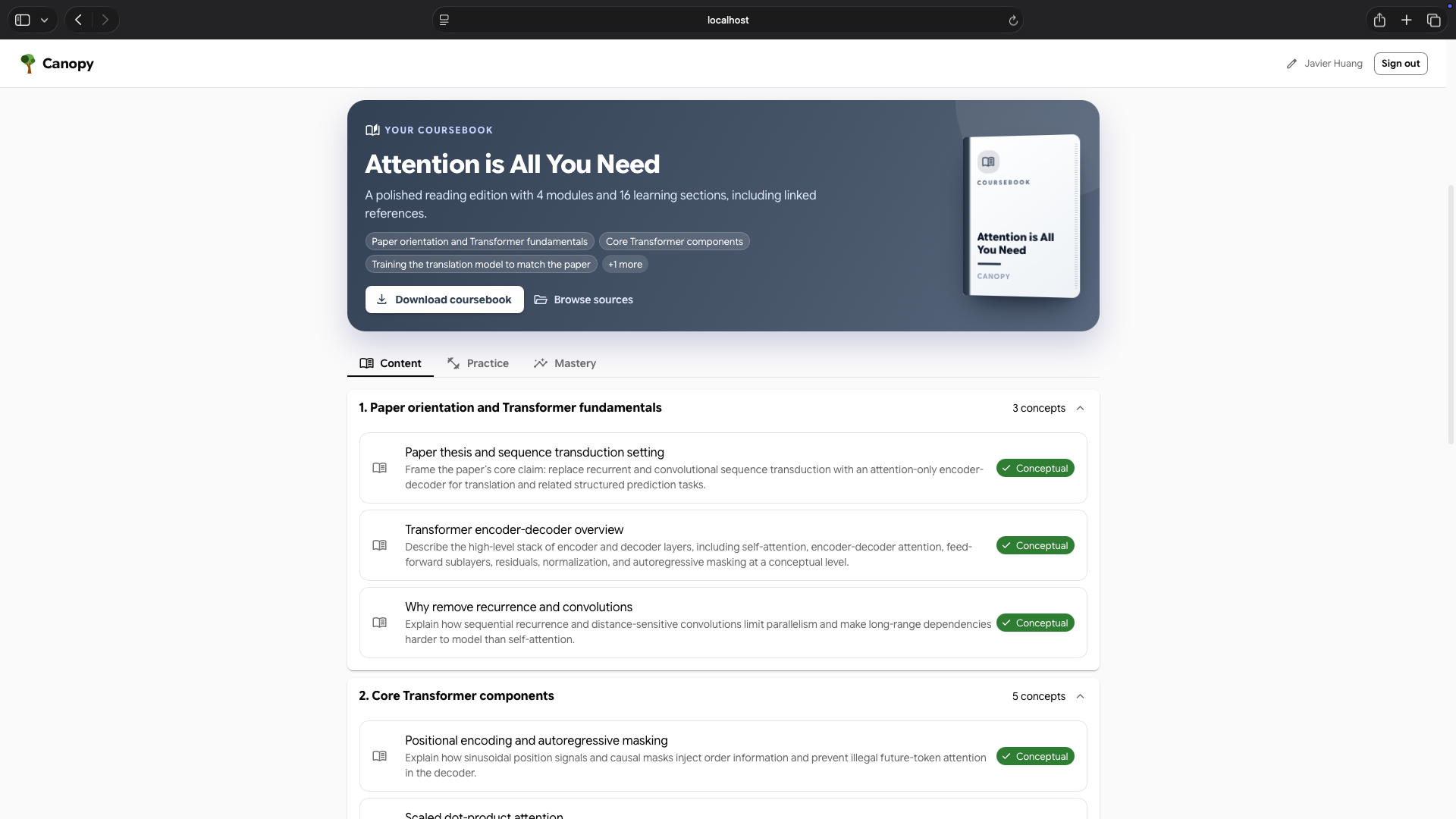
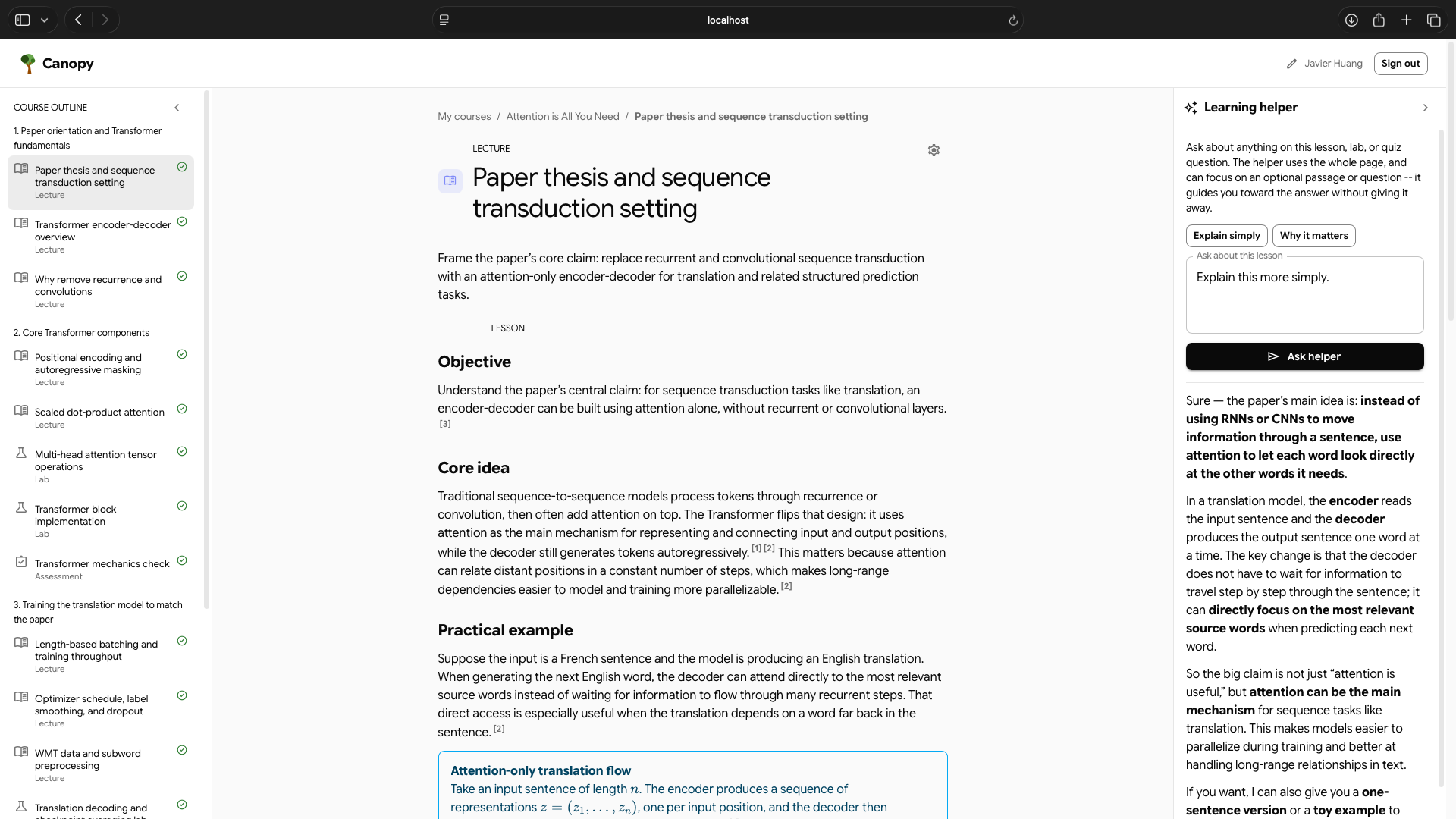
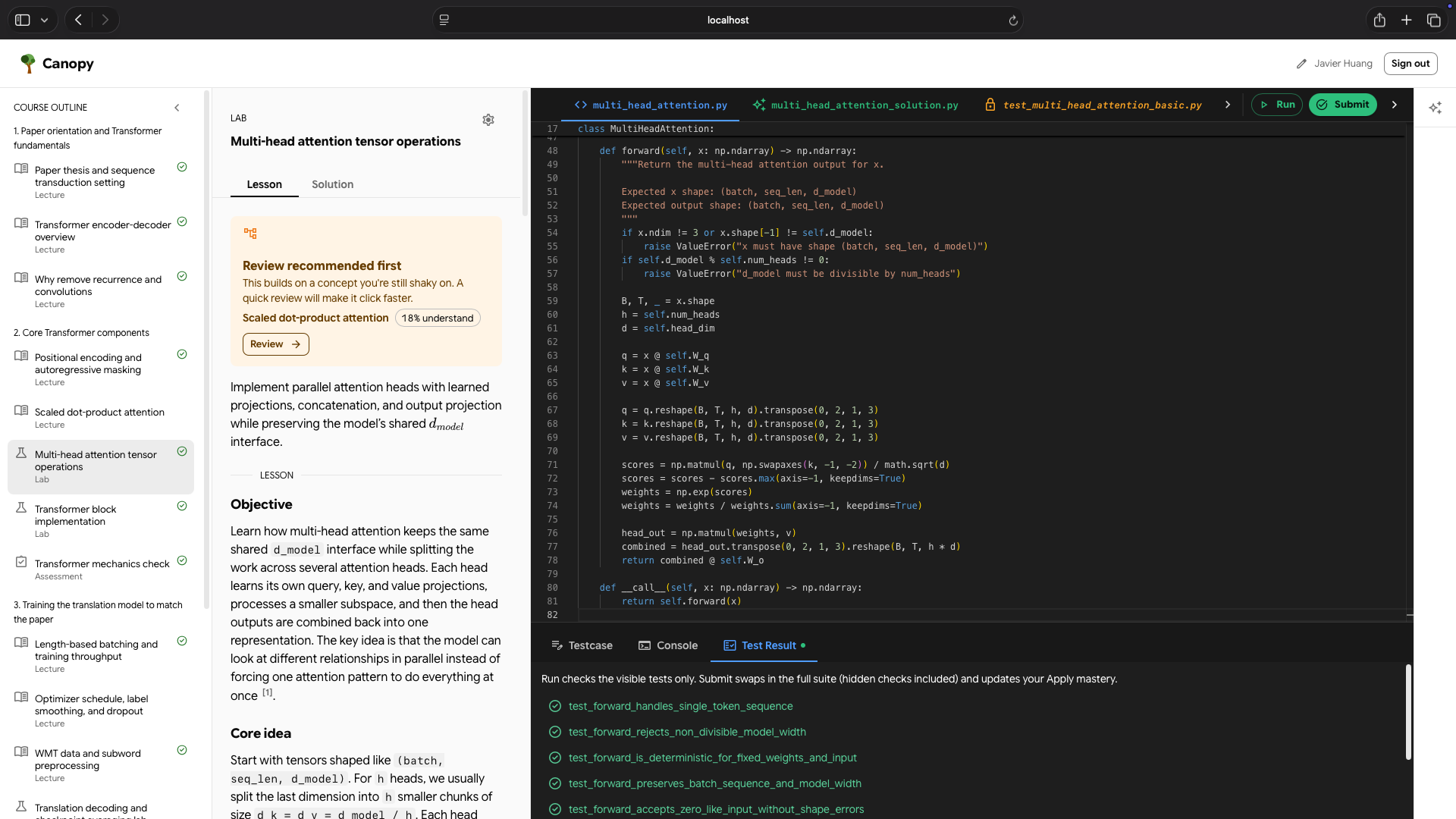
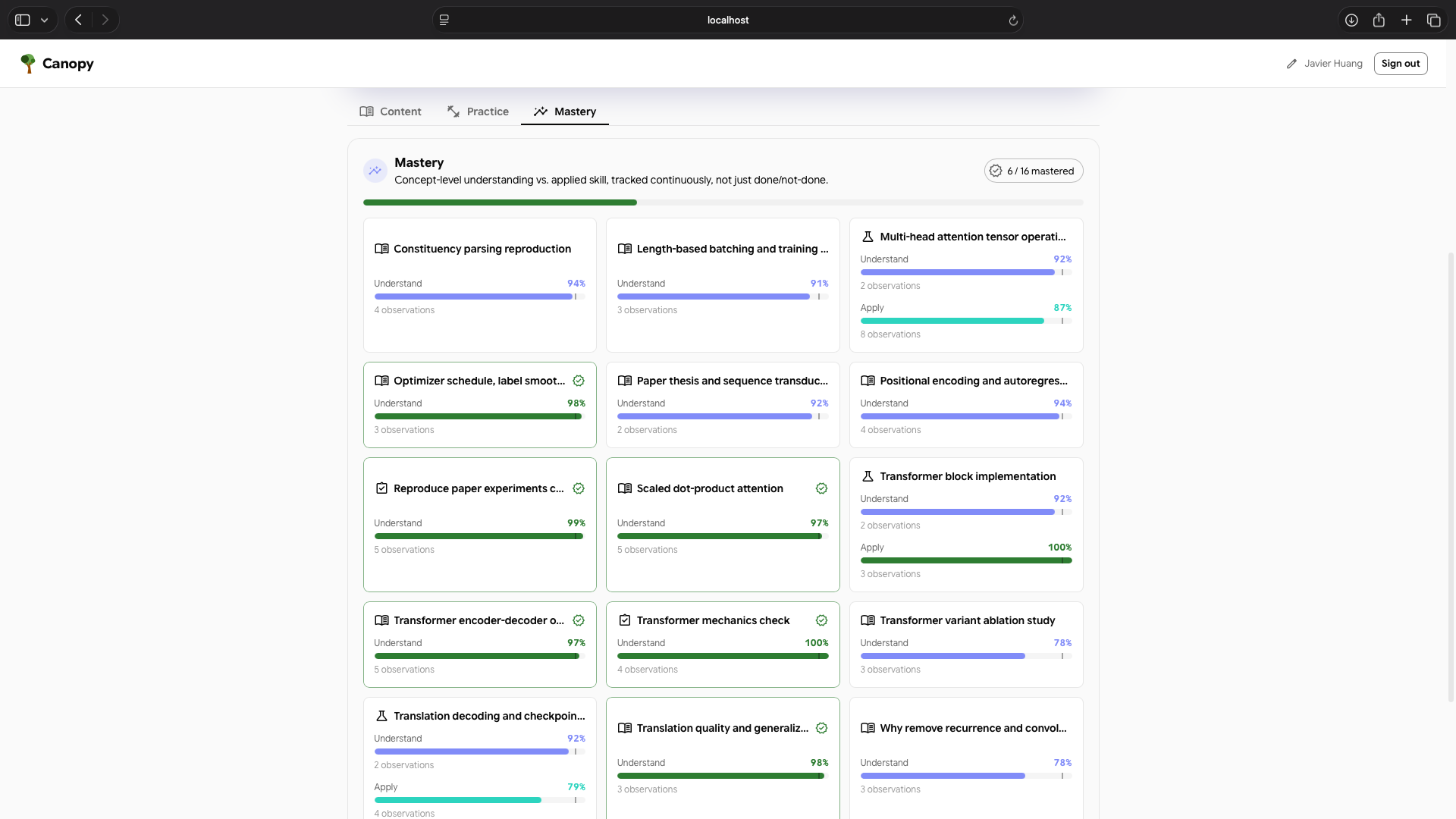
- Selected as a Top 20 Finalist in the 2026 OpenAI Build Week from 8,000+ projects and 46,000+ participants.
- Built Canopy, an AI learning platform that turns research papers, documentation, personal notes, or other sources, plus a stated learning goal, into complete source-grounded courses with lessons, worked examples, quizzes, and coding labs. Tracks per-concept mastery as separate Understand (quiz) and Apply (lab) estimates using Bayesian Knowledge Tracing, with prerequisite-aware review for weak concepts.
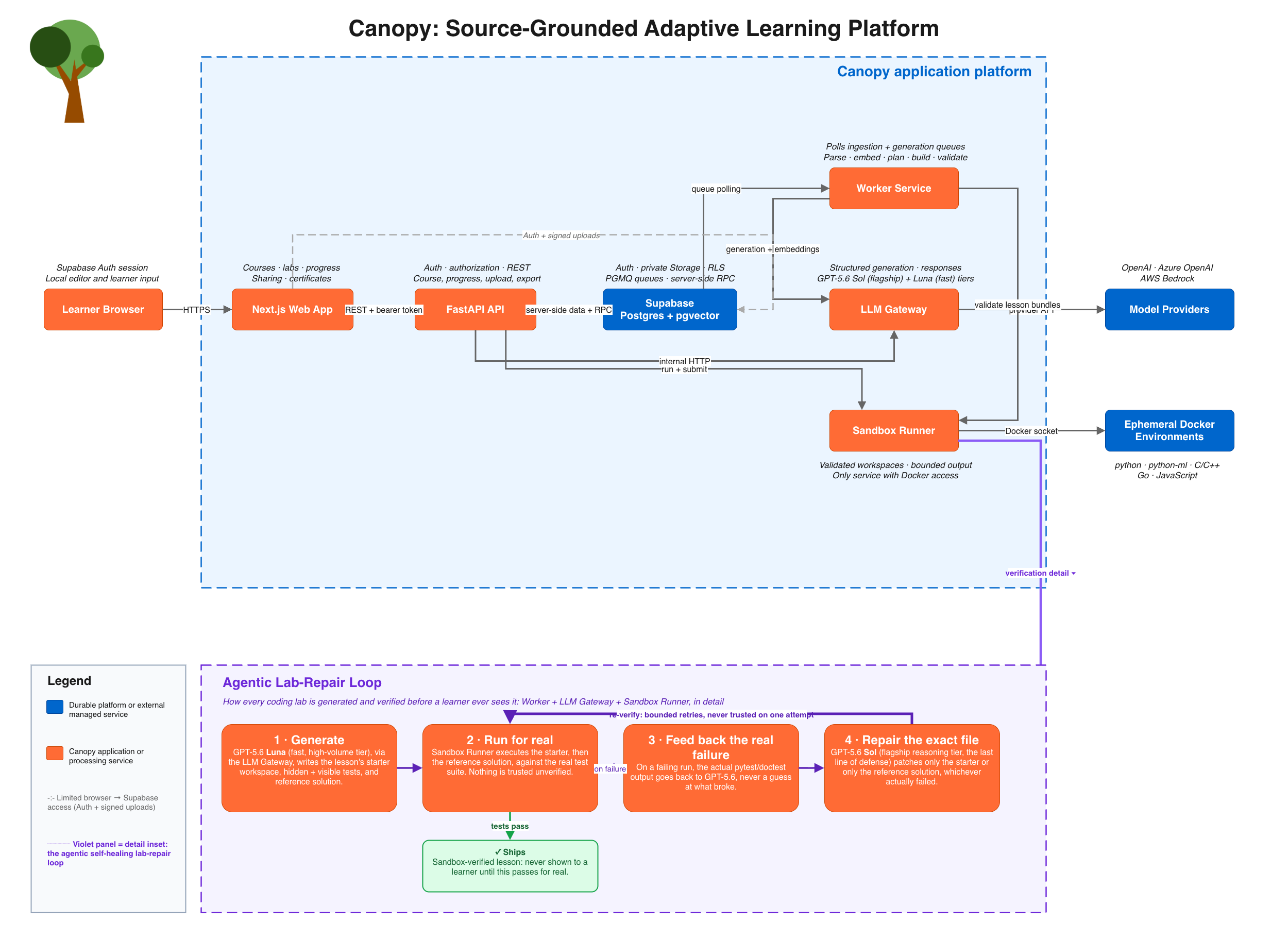
- Coding labs run in a Monaco-based editor and are validated before reaching learners through a bounded generate, execute, repair, and re-verify loop: reference solutions run against hidden tests in fresh, network-disabled, non-root sandbox containers, with real tracebacks fed back into regeneration.
- Built as a five-service platform: Next.js web app, FastAPI service, ingestion/generation worker, LLM gateway, and sandbox runner, backed by Supabase for authentication, storage, Postgres, and vector search. GPT-5.6 is routed by task complexity: flagship Sol for planning and lab repair, and faster Luna for high-volume authoring, grading, and the in-lesson assistant.
- Demonstrated the full pipeline by generating an end-to-end interactive course from Vaswani et al.'s "Attention Is All You Need" (arXiv:1706.03762), including lessons, assessments, mastery tracking, and executable coding labs.
 Eyas: AI Security Camera Agent arrow_outward
 2026 Hugging Face Build Small Hackathon, Best Agent Award with a $1,000 Prize
 GitHub arrow_outward emoji_events 2026 Hugging Face Build Small Hackathon, Best Agent Award with a $1,000 prize arrow_outward
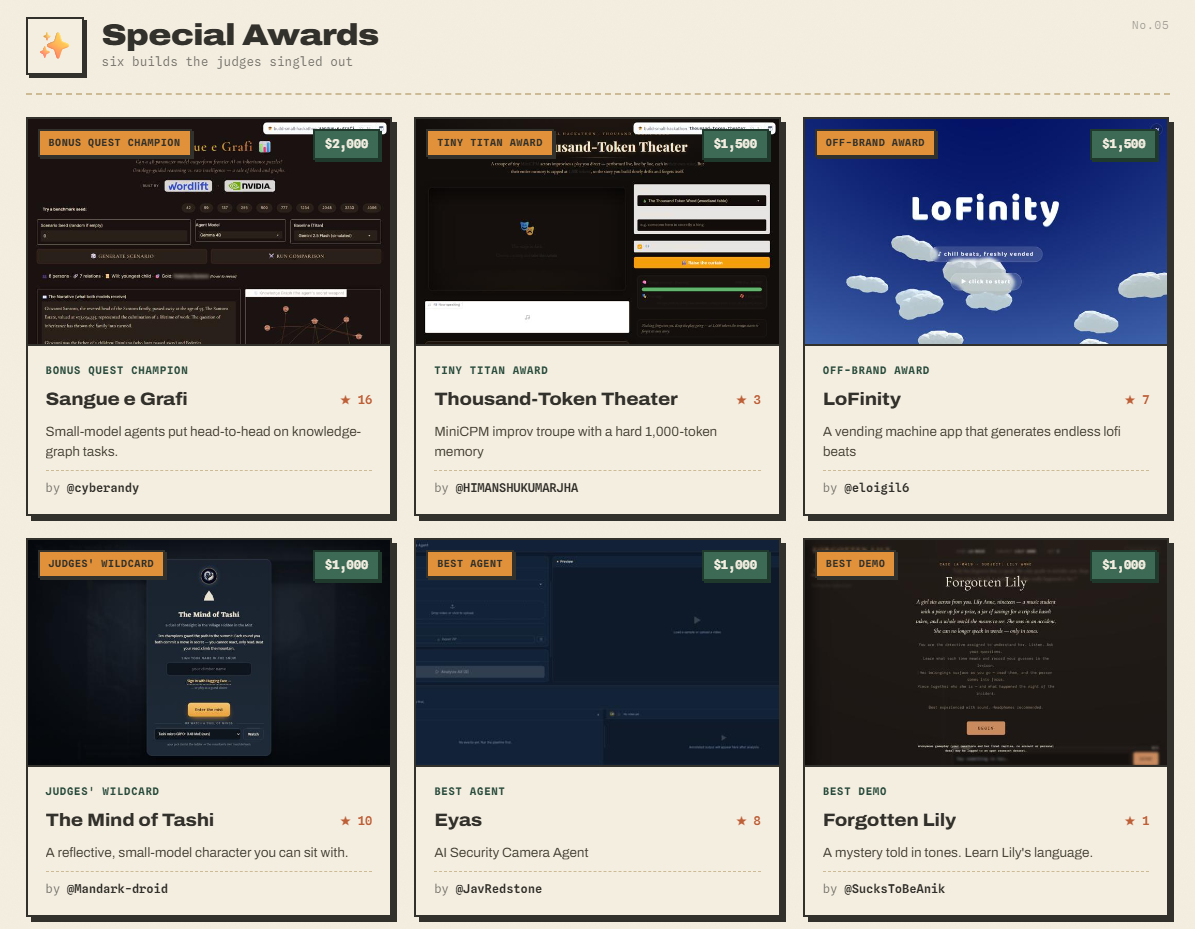
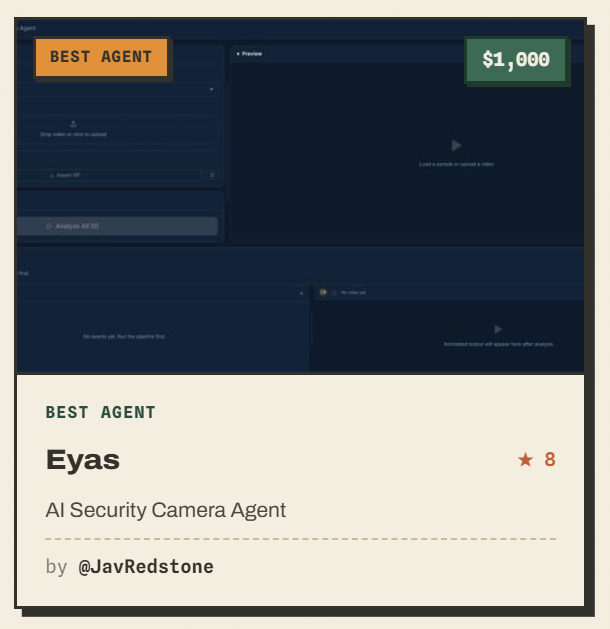
- Won the Best Agent Award with a $1,000 prize out of 946 apps created by hackers worldwide. Eyas is an offline CCTV intelligence agent that turns raw security footage into a structured event log using a chain of small, locally-running models with no cloud APIs, built to help convenience store owners detect shoplifting in real time instead of reviewing footage after the fact.
- Runs a four-stage pipeline entirely on CPU: YOLO11n detects and tracks people frame-by-frame; MiniCPM-V 4.6 (1.3B VLM) analyzes sub-sampled crops per tracked person and returns structured JSON observations; a heuristic event structurer converts observations into typed, zone-tagged events with timestamps using configurable evidence buffers; Nemotron 3 Nano 4B (Q4_K_M GGUF via llama-cpp-python) reasons over the structured event log to produce summaries, risk assessments, and natural-language Q&A with grammar-constrained JSON output. TinyAya handles Korean translation and VoxCPM2 generates audio briefings on CUDA-capable machines.
- Built a custom React SPA (Vite, MUI, Recharts, Framer Motion) served as static files through Gradio Blocks, replacing the default Gradio UI with a multi-camera review interface featuring resizable split panels, annotated video playback, a scatter-chart event timeline, and live pipeline progress tracking.
- Social media video filmed at Joy Convenience Store using mock camera angles. Demo footage sourced from publicly available CCTV clips, renamed and run through the full pipeline end-to-end.
 Mycelium: Autonomous GitLab Knowledge Continuity Agent arrow_outward
 Google Cloud Rapid Agent Hackathon
GitHub arrow_outward - Mycelium is a fully autonomous GitLab agent that prevents engineering knowledge loss by continuously modeling ownership, expertise, and structural fragility across a codebase and acting directly inside GitLab to stabilize it.
- Infers real ownership from commits, code reviews, module interaction patterns, and temporal signals. Identifies concentrated expertise risk, orphaned subsystems, and hidden fragility from evolving codebases and forks. When issues are detected, the agent autonomously creates targeted GitLab issues, generates onboarding context packs for new contributors, and produces handoff artifacts from historical activity when engineers go inactive.
- Runs a fully autonomous Observe → Model → Analyze → Decide → Act → Reflect → Persist → Summary pipeline. Webhook-driven triggers (push, merge request, issue, and member events) activate the pipeline in real time. A CLI enables direct operation with live streaming, on-demand onboarding and offboard generation, knowledge graph inspection, and event replay. A Next.js monitoring dashboard provides full visibility into live agent traces, per-stage reasoning, knowledge graph topology, bus factor analytics, and a complete action history log.
- Built on Google Cloud Agent Builder using Gemini via Vertex AI as the reasoning model and ADK as the agent runtime on Vertex AI Agent Engine. Execution layer uses the official GitLab MCP server alongside a custom GitLab MCP server for extended continuity workflows, and MongoDB MCP for persistent graph queries. Backend is a FastAPI server deployed on Cloud Run via Docker, handling webhook ingestion, pipeline orchestration, REST APIs, and SSE streams for real-time UI updates.
2026 Confluent Data Streaming World Tour AI Day Toronto Hackathon, First Place Winner, Most Impactful AI App Award (MacBook Pro Prize)
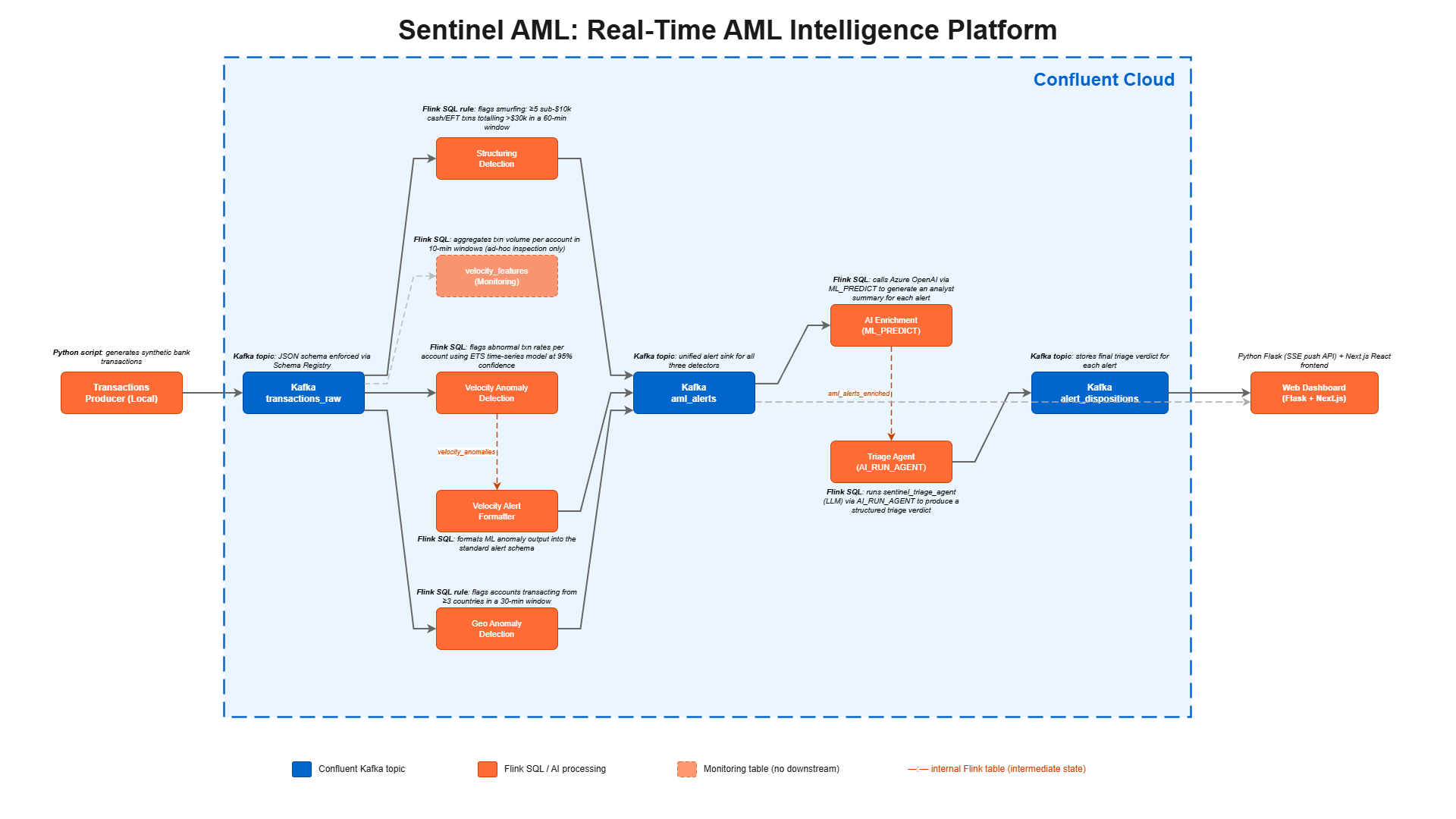
- First place winner at the 2026 Confluent Data Streaming World Tour AI Day Toronto Hackathon, with the Most Impactful AI App Award (MacBook Pro Prize). Built Sentinel AML, a real-time anti-money laundering (AML) intelligence platform that continuously analyzes financial transaction streams to detect suspicious activity as it occurs.
- Designed for compliance teams, financial crime investigators, and risk operations units in banks and fintechs, Sentinel AML replaces batch-based compliance with a continuous, autonomous, and auditable decision pipeline.
- Detection runs in Confluent Flink SQL using tumbling-window aggregations and statistical anomaly detection to surface behaviors such as structuring, velocity spikes, and cross-border anomalies within minutes.
- Alerts are enriched via Azure OpenAI (gpt-5-mini) using Confluent's ML_PREDICT function to produce concise analyst-ready explanations inside Flink, and routed to a streaming AI agent that triages cases to escalate, review, or dismiss with recommended Suspicious Activity Report (SAR) decisions.
- The system substantially reduces detection latency and manual investigation workload while improving response speed, operational efficiency, and auditability, lowering false positives compared to batch workflows.
1st Place Winner with a $15,000 prize - Hosted by Scotiabank × IMI BIGDataAIHUB
- Data Science & ML lead of Team 33. Led the team to win 1st place with a $15,000 prize among 430 competitors across 90+ teams, including PhD, Master's, and undergraduate students, in the IMI Big Data & AI competition hosted by the Institute for Management & Innovation (IMI) UTM BIGDataAIHUB in partnership with Scotiabank.
- Engineered a data-intensive, interpretable AI Anti-Money Laundering (AML) system analyzing risk-score distributions and anomalous behavior across 61k+ customers and 5.9M+ transactions under extreme class imbalance. Developed outlier detection models using Python, scikit-learn, Isolation Forest, One-Class SVM, and Local Outlier Factor; expanded the initial 2-model framework into 16 models, including 14 transaction-specific models across 7 transaction types, identifying 6.5× more critical risk cases.
- Designed and developed a source-compliant AML knowledge library (FINTRAC, FINCEN, FLSC, etc) mapping regulatory red flags to data features via AML patterns, enabling SHAP-generated, LLM-enhanced explanations that are human-readable, distinguish fraud vs. AML, and preserve auditability and factual consistency for compliance use.
- Built a full-stack Next.js web application integrating detection models, explainability, and the AML knowledge library into a unified investigator-facing workflow platform.
U of T ESC102 Praxis II Course Project
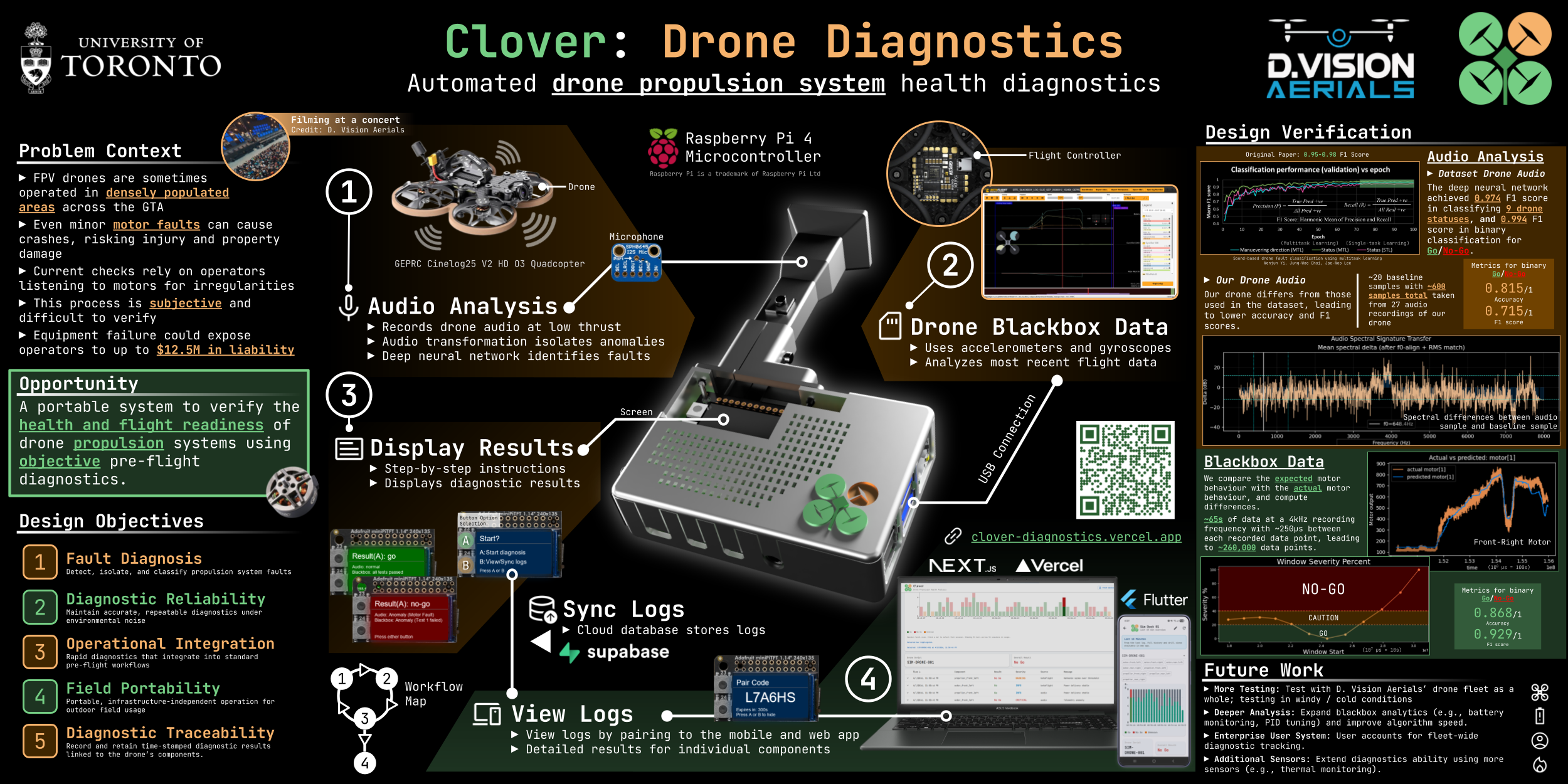
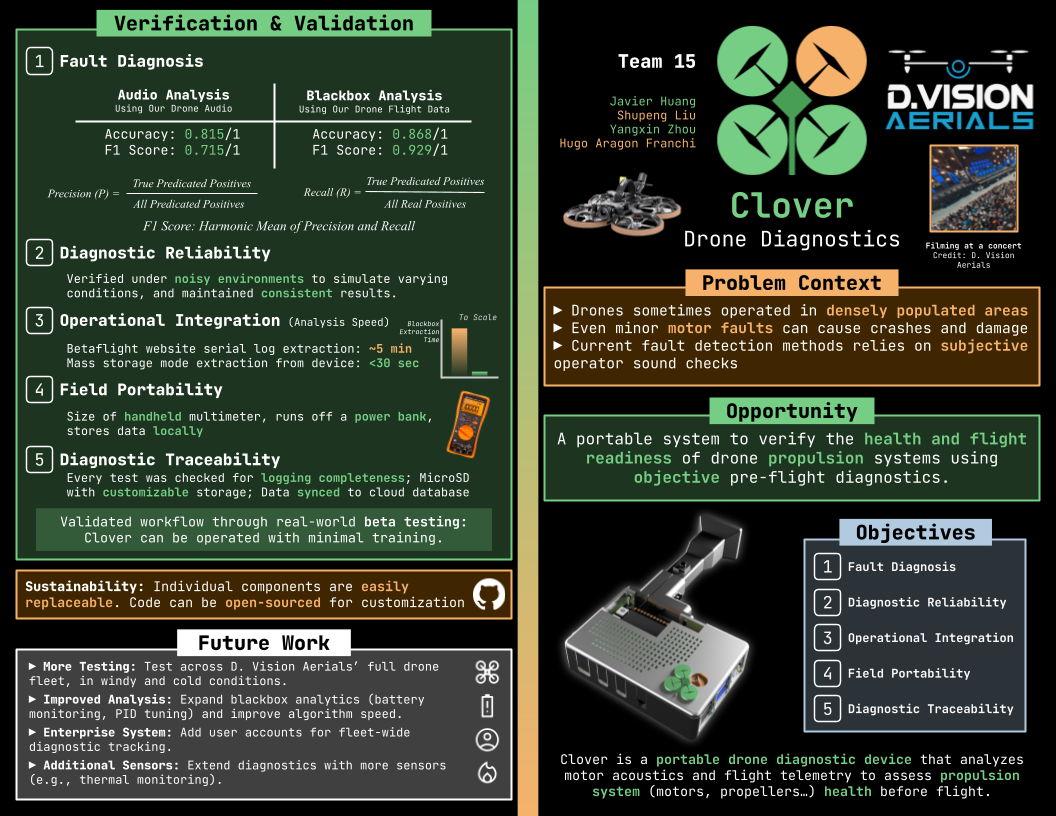
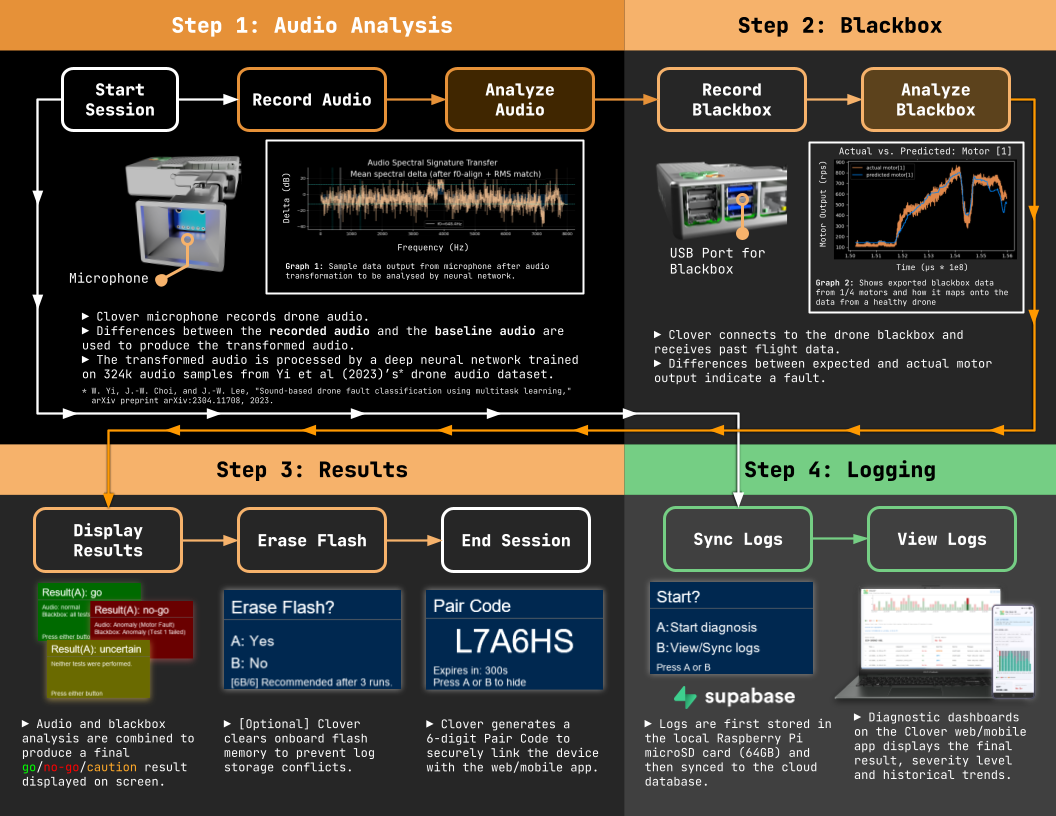
- Built Clover, a portable AI-powered pre-flight diagnostic system for D. Vision Aerials' FPV drones. Clover replaces manual motor spin checks with automated go/no-go assessments, improving consistency in pre-flight decisions and reducing operational risk in dense urban environments.
- The system evaluates drone health by combining acoustic motor analysis with onboard flight controller blackbox telemetry, comparing expected motor behavior against observed performance to detect and localize faults prior to flight.
- Clover runs on an edge platform (Raspberry Pi), producing real-time, time-stamped diagnostic outputs with full audit logs, and syncing results to a Supabase cloud database. Data is accessible remotely through a Flutter mobile app and a Next.js web dashboard for monitoring and review.
- For acoustic fault detection, it uses a multitask 1D CNN-ResNet architecture based on sound classification research. The deep learning model identifies fault types (motor, propeller) and infers flight direction. Audio inputs are standardized via preprocessing and domain normalization so that recordings from different drone units are mapped into the same feature distribution as the training dataset, ensuring compatibility and stable anomaly detection.
- The model was trained for 100 epochs on 324k audio samples, reaching 97.4% accuracy and F1 score on the reference dataset. In field testing, Clover achieved 81% accuracy/F1 on acoustic data and 87% on blackbox telemetry-based diagnostics.
Research spanning AI/ML, engineering, math, and science.
9 research items
Featured Research

SceneClarity: A Unified Framework for Scene Reliability Estimation and Classification in Autonomous Vehicle Perception
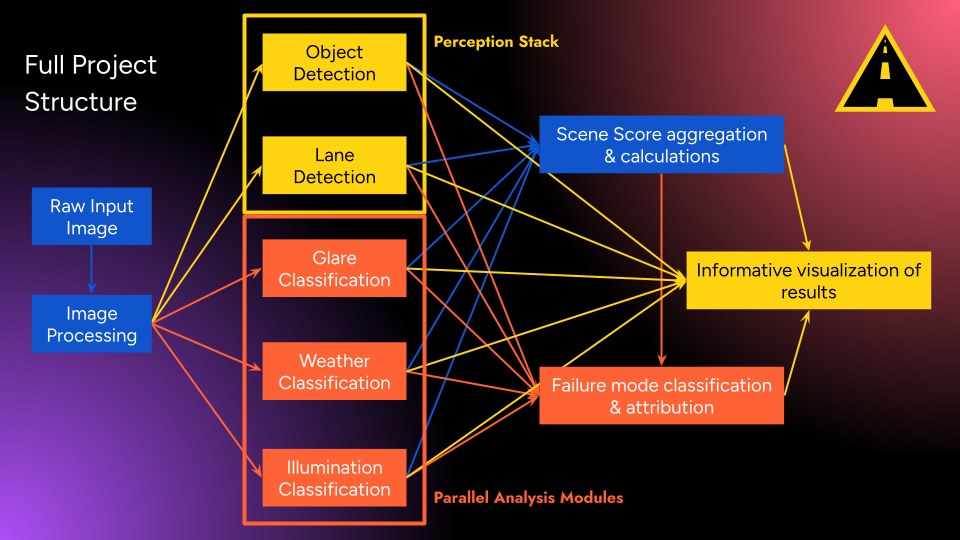
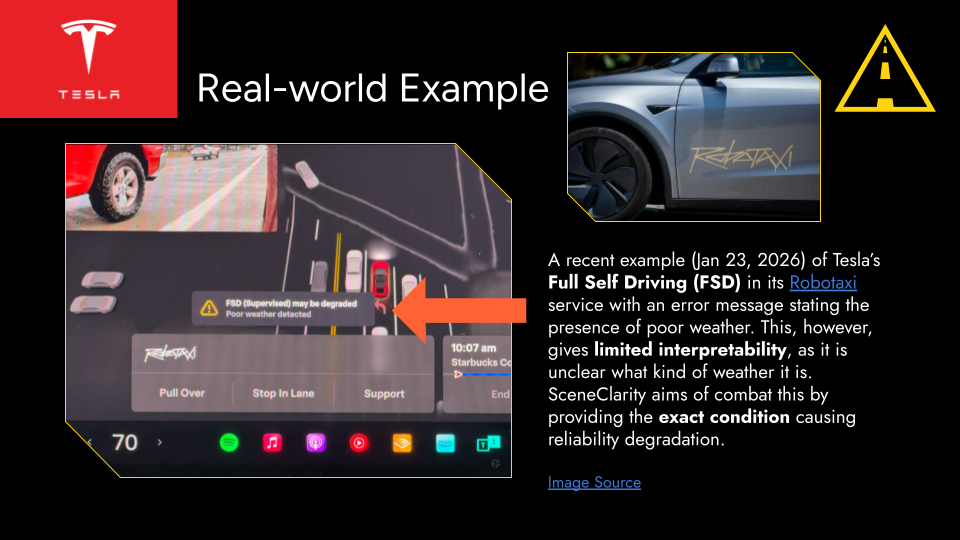
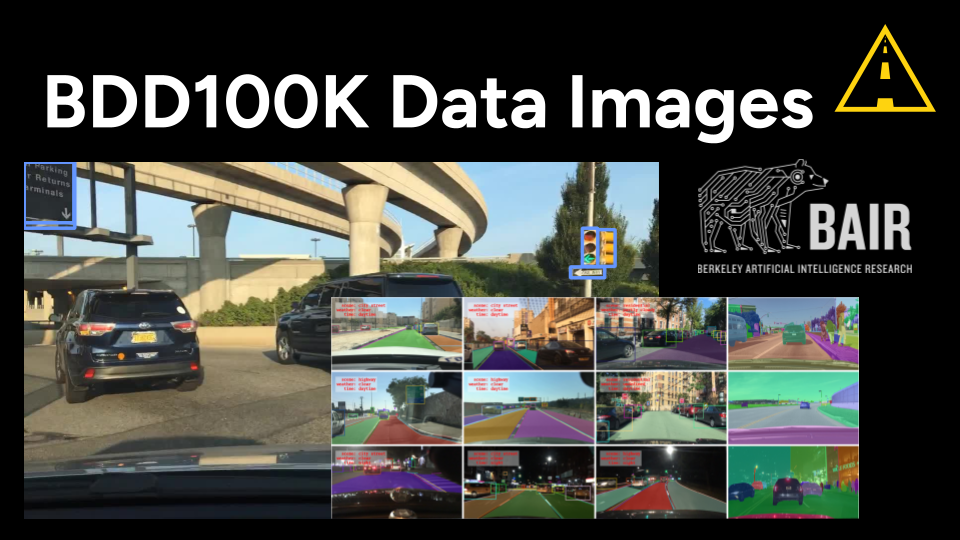
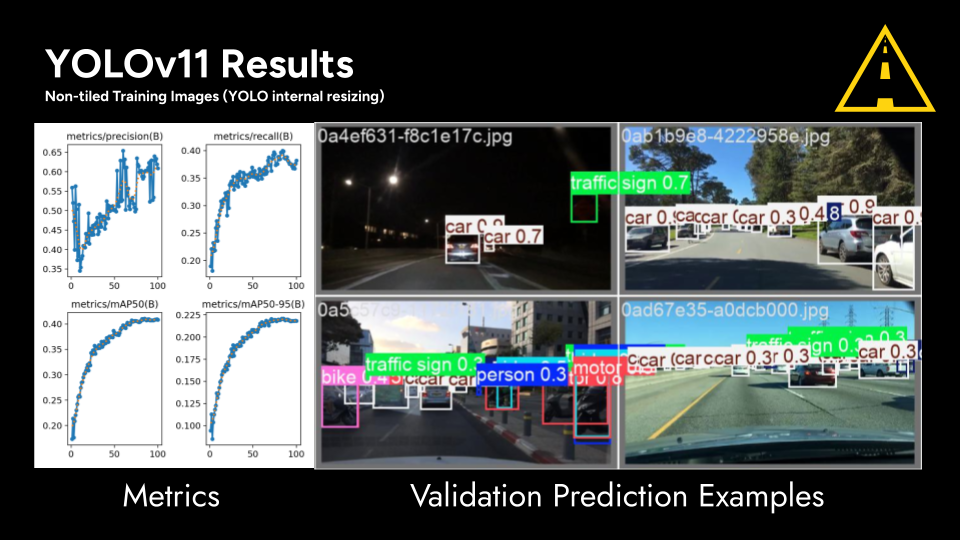
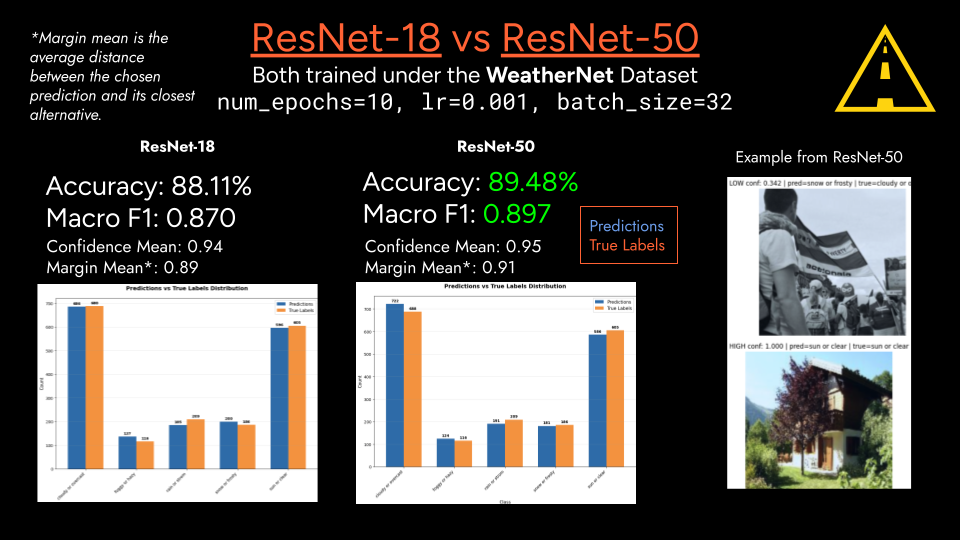
- Led the development of the SceneClarity machine learning project, a modular framework for estimating scene-level reliability in autonomous vehicle perception, addressing degradation under adverse conditions such as fog, rain, snow, and glare where failures often co-occur and are difficult to diagnose at the system level.
- The architecture separates perception, environmental inference, and aggregation modules through a fixed interface, allowing components to be replaced without redesigning the aggregation logic.
- Introduces a framework that aggregates perception outputs and environmental signals into a global reliability score with attribution to likely degradation factors, representing reliability as a decomposition over semantically interpretable scene-level components, unlike per-prediction uncertainty methods.
- Implemented as a real-time system producing structured outputs and visualizations to support failure analysis, safety monitoring, and debugging.
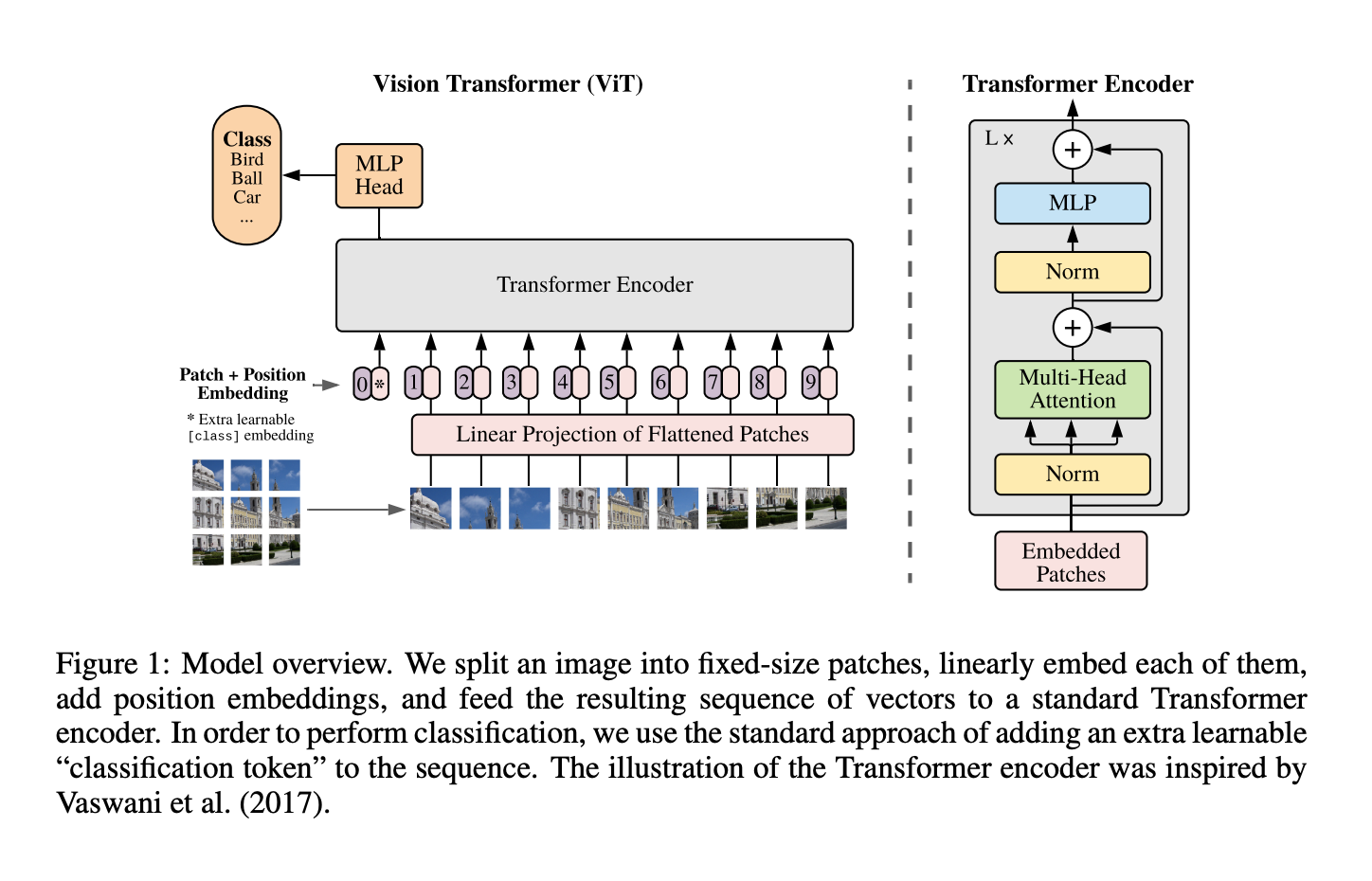

- Implemented the Vision Transformer (ViT-B/16) architecture from scratch in PyTorch, following the paper "An Image is Worth 16x16 Words: Transformers for Image Recognition at Scale." Manually built all core components, including convolutional patch embeddings, class and positional embeddings, Multi-Head Self-Attention (MSA) and MLP blocks with Layer Normalization (LN) and residual connections, as well as the final classification head.
- Used the equations and architectural definitions from the original paper to reason about data flow and tensor transformations throughout the model, explicitly tracking tensor shapes step-by-step from input images to output classification in order to ensure correctness and deepen understanding of the model structure.
- Validated the implementation end-to-end by training the model from scratch on a 5-class weather image classification dataset sourced from Kaggle. Documented training simplifications relative to the paper and compared the custom implementation with PyTorch's built-in ViT.

Autonomous Vehicle Path Planning, Deep Learning & Ethics
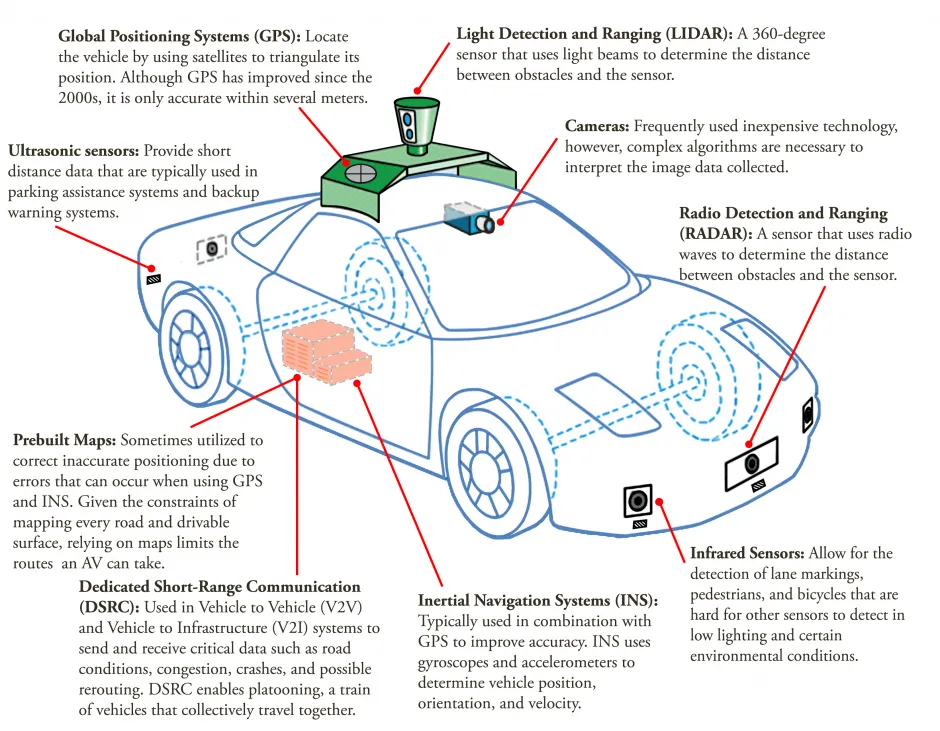
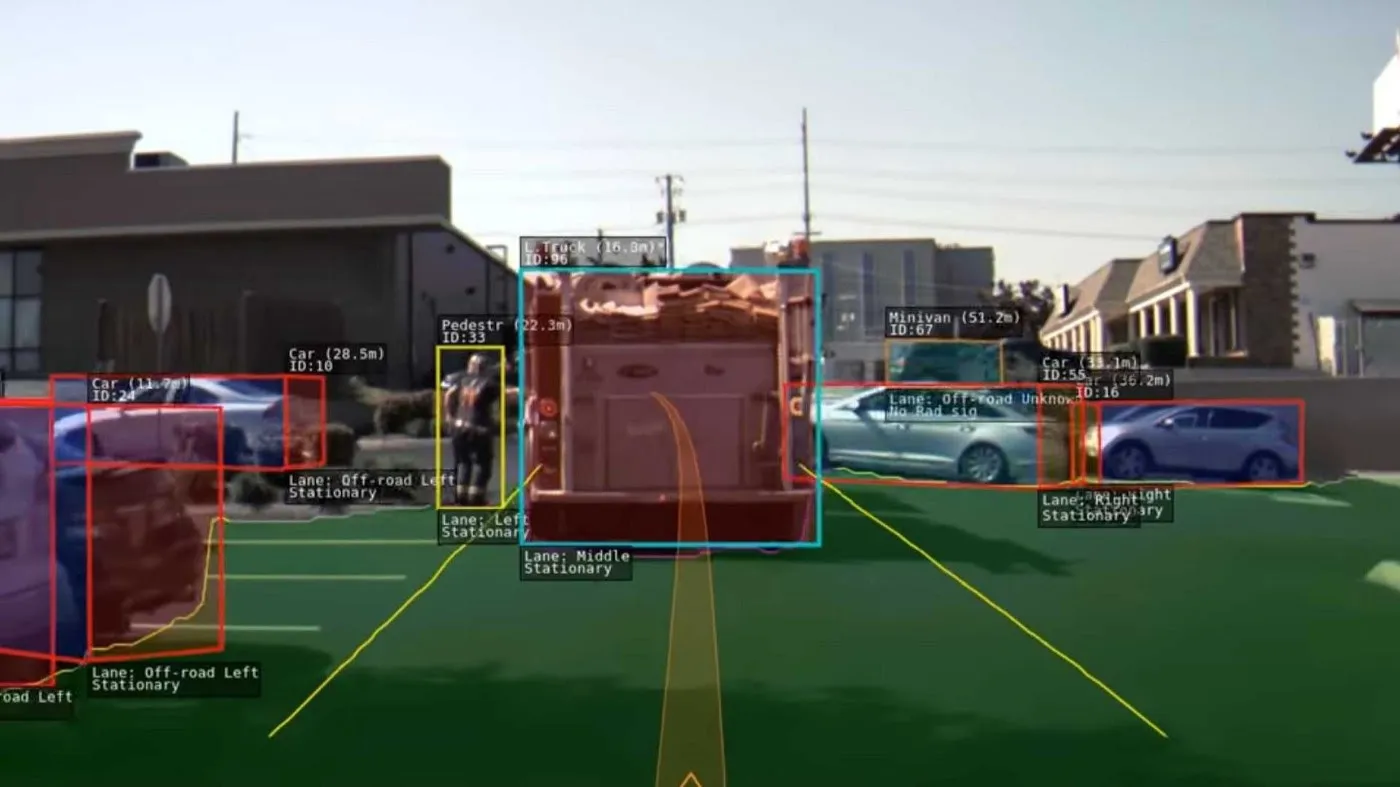
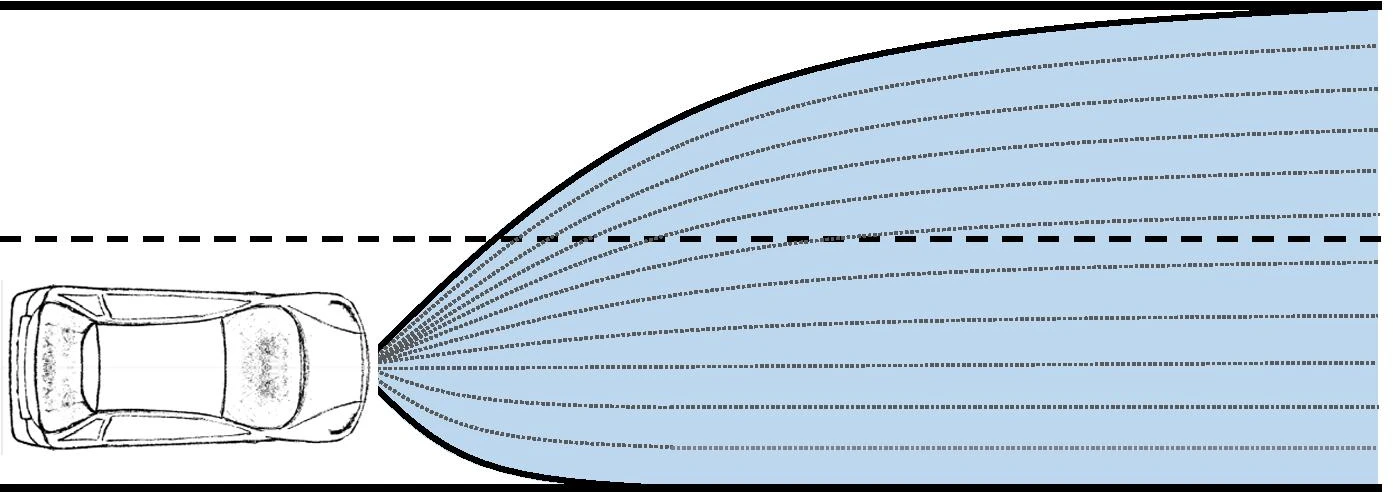
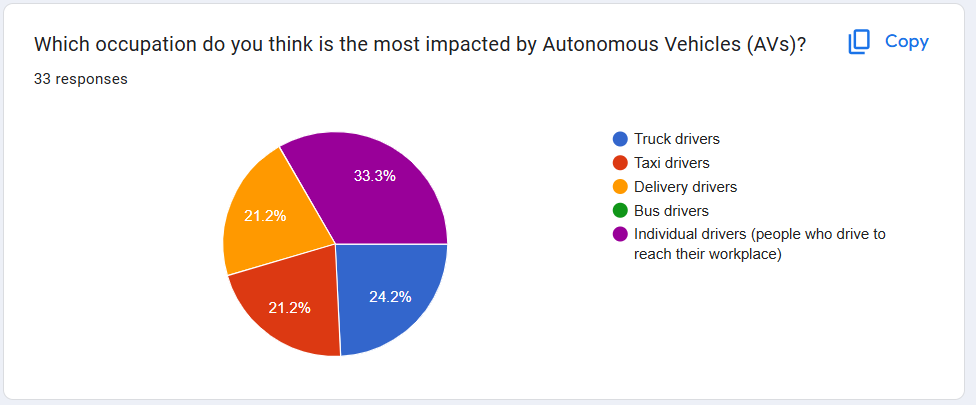
- Produced a 4000-word research paper evaluating the societal, ethical, and regulatory impacts of autonomous vehicles (AVs) through empirical research and academic literature. Analyzed deep learning applications in AV perception and path-planning systems, assessing both technical capabilities and ethical limitations.
- Designed and conducted a primary survey on public perceptions of AV safety and adoption, generating quantitative insights through data analysis. Synthesized primary and secondary sources to develop evidence-based predictions on future AV regulation and adoption trends.
My professional certifications across AI/ML, data science, data engineering, cloud platforms, and investment.
48 certifications
Professional Certifications
PyTorch fundamentals & tensors • Training workflows • Computer vision with CNNs • Transfer learning • Model deployment • PyTorch 2.0 & torch.compile
Trading strategy design & backtesting • Technical indicators in Python • Machine learning trading models • Live strategy deployment on AWS
Flink SQL & stream processing • Kafka Streams integration • Stateful stream processing • Event-time & windowing
Microsoft Fabric lakehouse architecture • Data pipelines & Dataflows • Copilot-assisted data engineering
Building dbt models • Sources & staging • Testing & documentation • Jinja templating & macros
Timezone conversions with Date/Time types • Geolocation mapping via IP • Tasks & MERGE statements • Change data capture with Streams • Event-driven loading with Snowpipe
Anypoint Platform architecture • API design with RAML • DataWeave transformations • Mule flow development & error handling • API deployment & management
Investment industry overview • Ethics & professional standards • Quantitative concepts & economics • Financial statement analysis • Equity, fixed income & derivatives • Portfolio management basics
Trading floor terminology & futures basics • Payoff diagrams & put-call parity • Combination spreads • The Greeks: Delta, Gamma, Theta, Vega & Rho
Bachelor of Applied Science (BASc) in Computer Engineering, Minor in Artificial Intelligence Engineering.
Focus: Software Engineering, Data Science, and Artificial Intelligence.
48 courses
Featured Courses
Academic achievements, competition wins, and recognition for excellence.
25 awards
Featured Awards
Selected as one of top 20 finalists in OpenAI Build Week from 8,000+ projects and 46,000+ participants. Built Canopy, an AI-powered learning platform that turns technical source material into hands-on courses with retrieval practice, coding labs, and mastery tracking.
Won the Best Agent Award with a $1,000 prize out of 946 apps created by hackers worldwide. Built Eyas, an on-device AI security camera agent for convenience stores. It runs person tracking, event detection, and LLM reasoning over CCTV footage to surface theft, loitering, and suspicious activity as a structured, searchable log.
Built Sentinel AML, a real-time anti-money laundering (AML) platform that detects suspicious financial activity as it happens. The project was built on Confluent Cloud, leveraging Kafka, Flink SQL, Azure OpenAI, and streaming AI agents to enable intelligent real-time event pipelines for faster and more accurate financial crime investigations.
Led team 33 to win 1st place with a $15,000 prize among 430 competitors across 90+ teams, including PhD, Masters, and Undergraduate students. Built a robust and interpretable machine learning based Anti-Money Laundering (AML) detection system.
Developed an advanced computer AI for Pong that achieved a 50-1 win record against a chaser opponent.
For outstanding academic performance and active engagement in schools and communities.
A breakdown of my technical skills across 5 categories and 161+ technologies.
161+ skills · 5 categories