IMI Big Data & AI Competition 2025-2026 arrow_outward
1st Place Winner with a $15,000 prize - Hosted by Scotiabank × IMI BIGDataAIHUB
December 2025 – April 2026
PythonPandasNumPyscikit-learnJupyter NotebookGitHub
Team lead of team 33. Led the team to win 1st place with a $15,000 prize among 430 competitors across 90+ teams, including PhD, Masters, and Undergraduate students, in the IMI Big Data & AI competition hosted by the Institute for Management & Innovation (IMI) UTM BIGDataAIHUB in partnership with Scotiabank.
Engineered a data-intensive, interpretable AI Anti-Money Laundering (AML) system, with data analysis pipelines using 16 machine learning models across individual and small business entities, trained on customer-level features aggregated over 7 transaction types plus an all-types view in largely unlabelled financial data, capturing overall and transaction-specific anomalies.
Designed and developed a source-compliant AML knowledge library (FINTRAC, FINCEN, FLSC, etc) mapping regulatory red flags to data features via AML patterns, enabling SHAP-generated, LLM-enhanced explanations that are human-readable, distinguish fraud vs. AML, and preserve auditability and factual consistency for compliance use.
Built a full-stack Next.js web application integrating detection models, explainability, and the AML knowledge library into a unified investigator-facing workflow platform.
Clover: Drone Propulsion System Health Diagnostics
U of T ESC102 Praxis II Course Project
January 2026 – April 2026
PythonPyTorchSupabaseFlutterNext.jsReactNumPyPandasMatplotlibJupyter NotebookGitGitHub
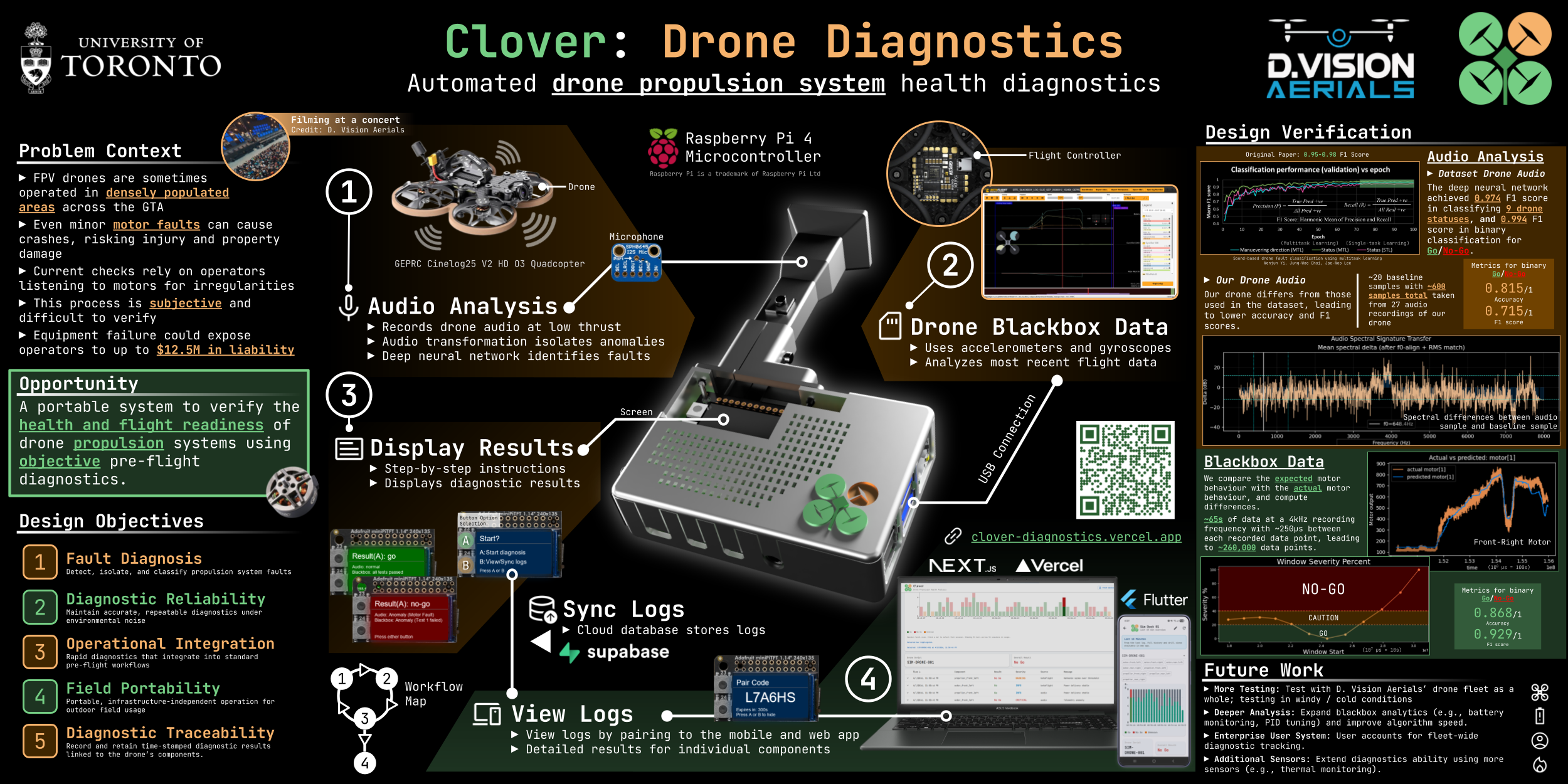
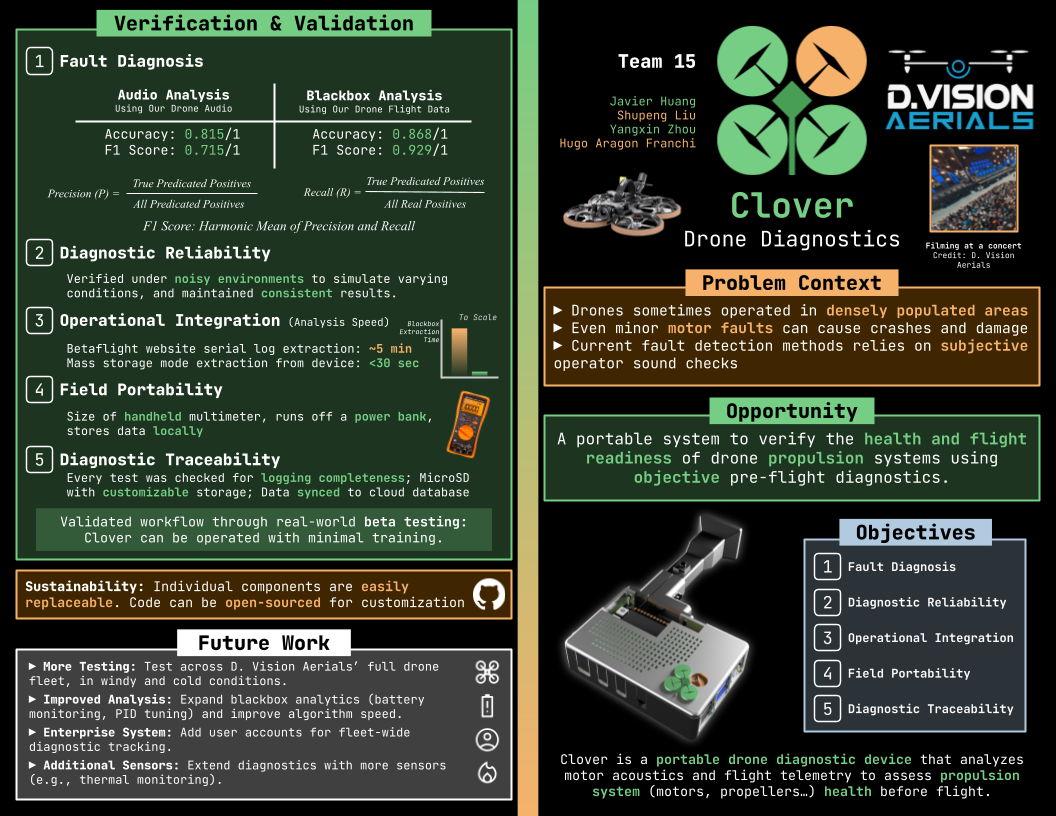
Built Clover, a portable AI-powered pre-flight diagnostic system for D. Vision Aerials' FPV drones. Clover replaces manual motor spin checks with automated go/no-go assessments, improving consistency in pre-flight decisions and reducing operational risk in dense urban environments.
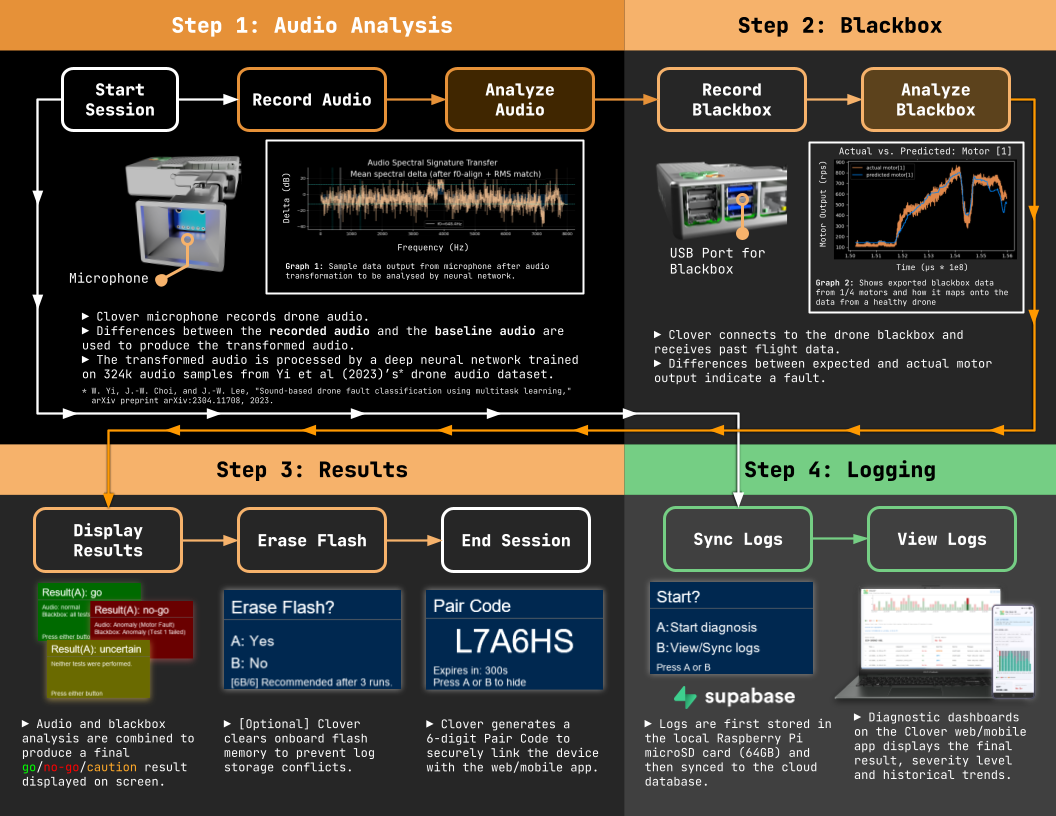
The system evaluates drone health by combining acoustic motor analysis with onboard flight controller blackbox telemetry, comparing expected motor behavior against observed performance to detect and localize faults prior to flight.
Clover runs on an edge platform (Raspberry Pi), producing real-time, time-stamped diagnostic outputs with full audit logs, and syncing results to a Supabase cloud database. Data is accessible remotely through a Flutter mobile app and a Next.js web dashboard for monitoring and review.
For acoustic fault detection, it uses a multitask 1D CNN-ResNet architecture based on sound classification research. The deep learning model identifies fault types (motor, propeller) and infers flight direction. Audio inputs are standardized via preprocessing and domain normalization so that recordings from different drone units are mapped into the same feature distribution as the training dataset, ensuring compatibility and stable anomaly detection.
The model was trained for 100 epochs on 324k audio samples, reaching 97.4% accuracy and F1 score on the reference dataset. In field testing, Clover achieved 81% accuracy/F1 on acoustic data and 87% on blackbox telemetry-based diagnostics.
 SceneClarity: A Unified Framework for Scene Reliability Estimation and Classification in Autonomous Vehicle Perception
 UTMIST Machine Learning Project
August 2025 – April 2026
PyTorchTensorFlowscikit-learnPandasNumPyJupyter NotebookGoogle ColabYOLOv11MobileNetV3ResNet-50LaneNetDockerREST APIsNext.jsReactGitHubVisual Studio CodeJira
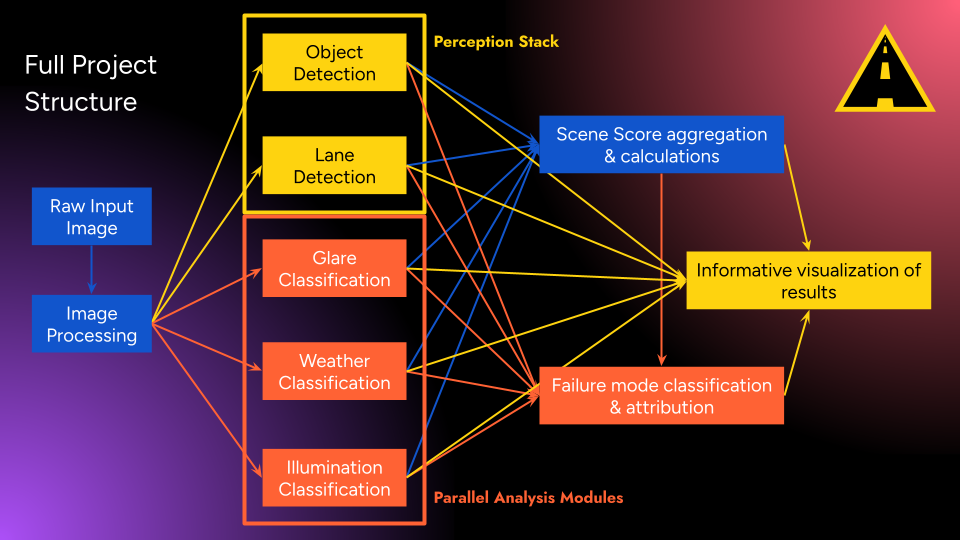
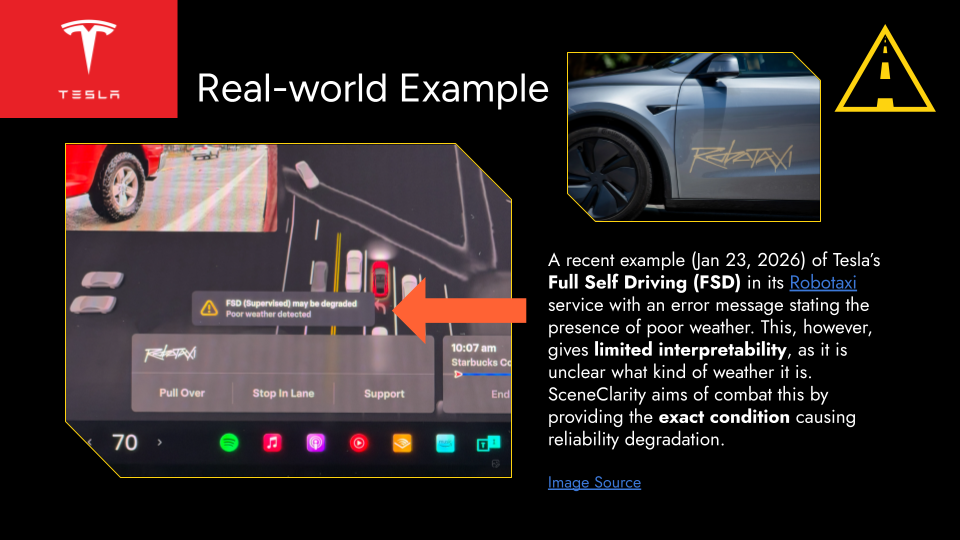
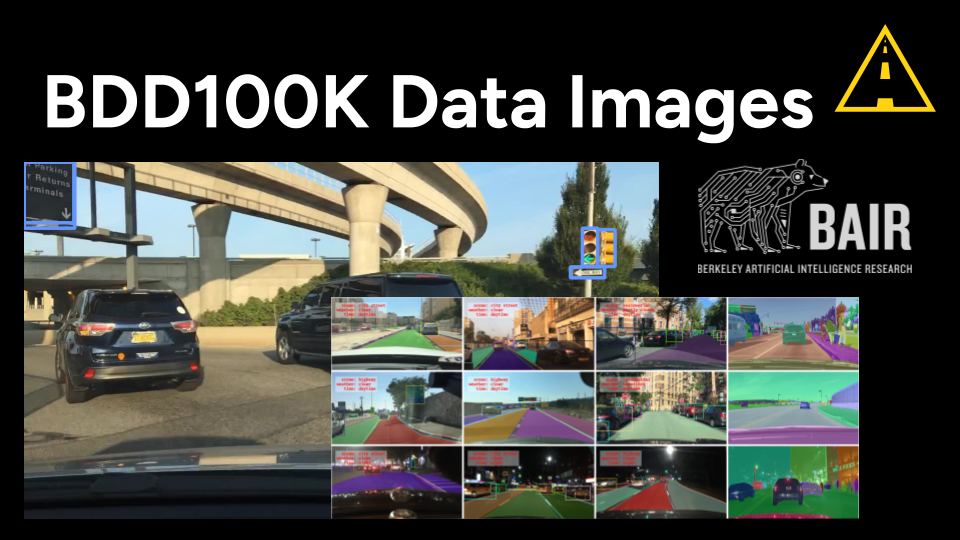
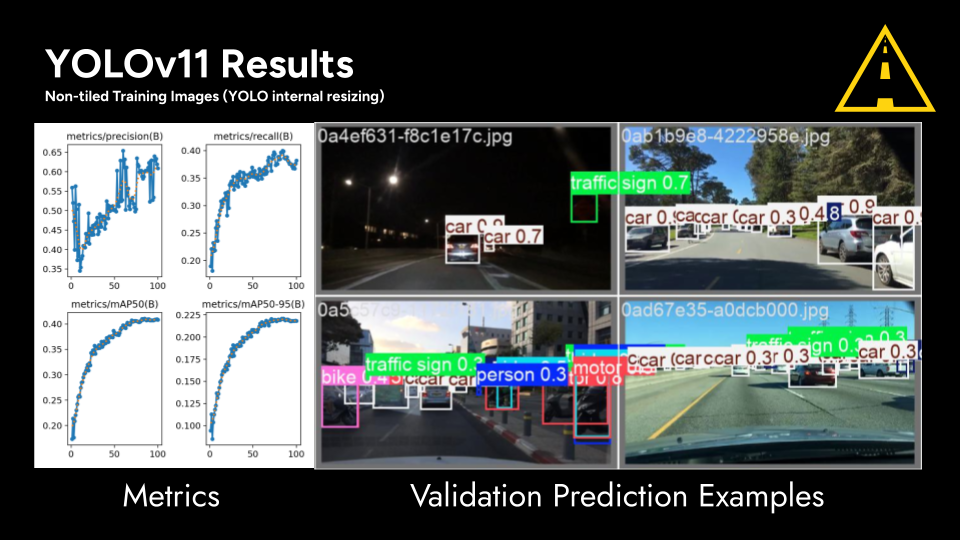
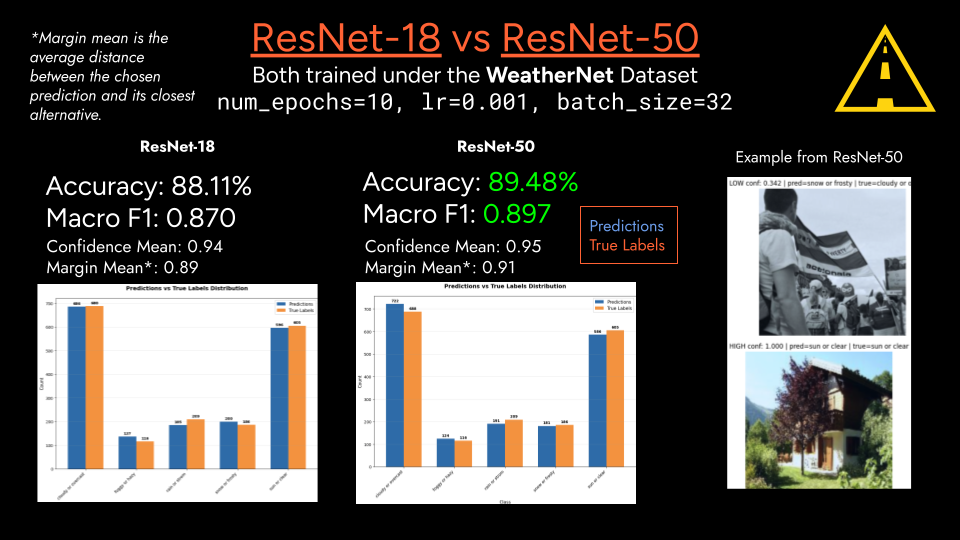
Led the development of the SceneClarity ML project, a modular framework for estimating scene-level reliability in autonomous vehicle perception, addressing degradation under adverse conditions such as fog, rain, snow, and glare where failures often co-occur and are difficult to diagnose at the system level.
The architecture separates perception, environmental inference, and aggregation modules through a fixed interface, allowing components to be replaced without redesigning the aggregation logic.
Introduces a framework that aggregates perception outputs and environmental signals into a global reliability score with attribution to likely degradation factors, representing reliability as a decomposition over semantically interpretable scene-level components, unlike per-prediction uncertainty methods.
Implemented as a real-time system producing structured outputs and visualizations to support failure analysis, safety monitoring, and debugging.
Pong Strategic Computer AI
Bronze Medalist in the U of T EngSci Pong AI Tournament 2025
November 2025 – December 2025
PythonPygameVisual Studio Code
Bronze Medalist in the U of T EngSci Pong AI Tournament 2025. Developed an advanced computer AI for Pong that achieved a 50-1 win record against a chaser opponent (a simple player that follows the ball's Y-position).
Implemented physics-based bounce simulation with accurate wall and paddle collision detection, and a two-bounce prediction algorithm that anticipates the ball's trajectory through multiple rebounds.
Engineered offensive strategies that aim for paddle edges to generate unpredictable bounce angles, exploiting paddle angle mechanics to maximize scoring opportunities.
Designed a detection sequence system to dynamically identify paddle positioning, and simulated opponent paddle movement to predict future game states for strategic decision-making.
 StackDAG arrow_outward
 May 2025 – Sep 2025
Next.jsReactJSXTSXTypeScriptFirebaseSupabase Cloud DatabasePostgreSQLSQLOpenAIGitHubVisual Studio Code
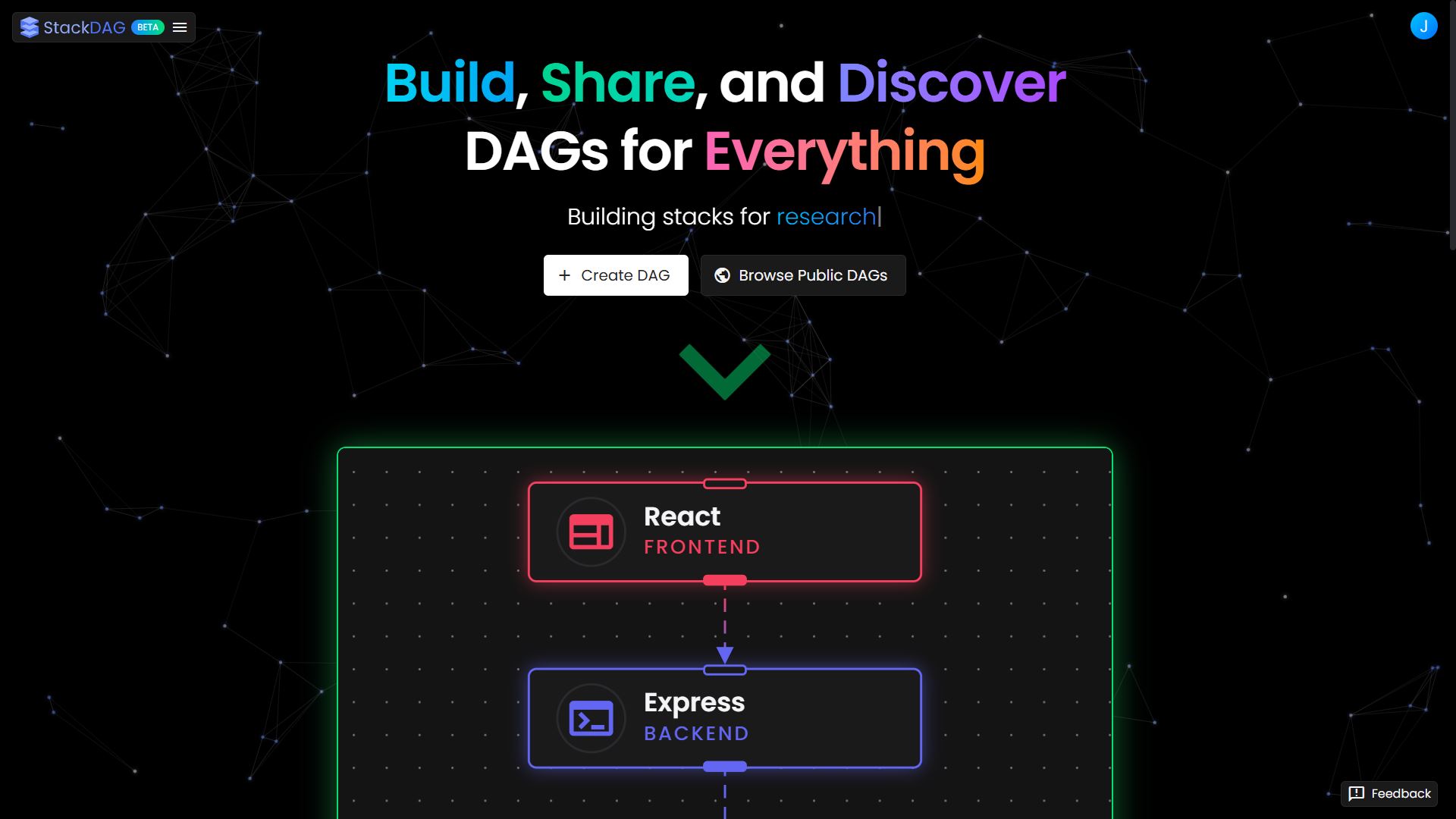
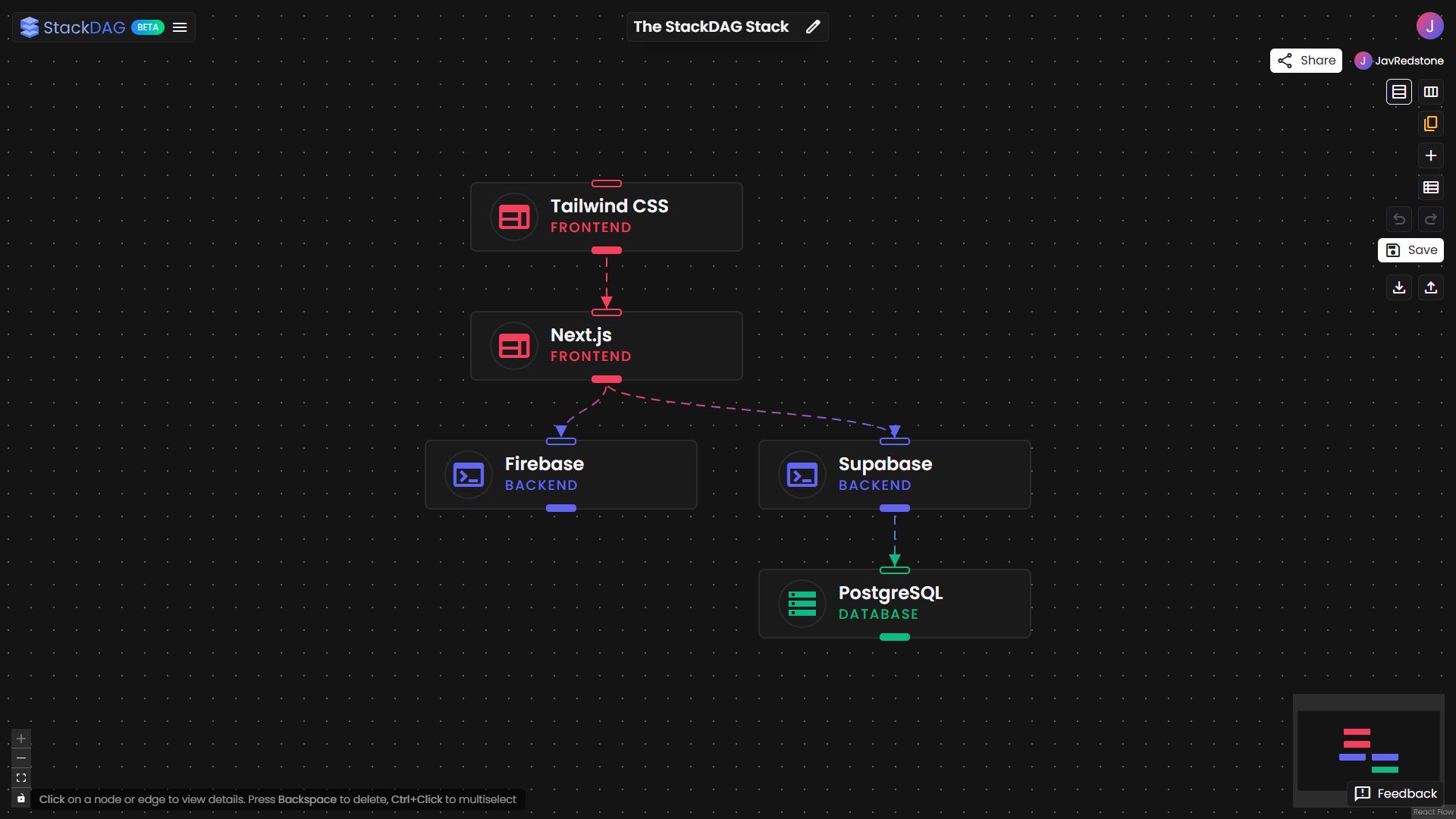
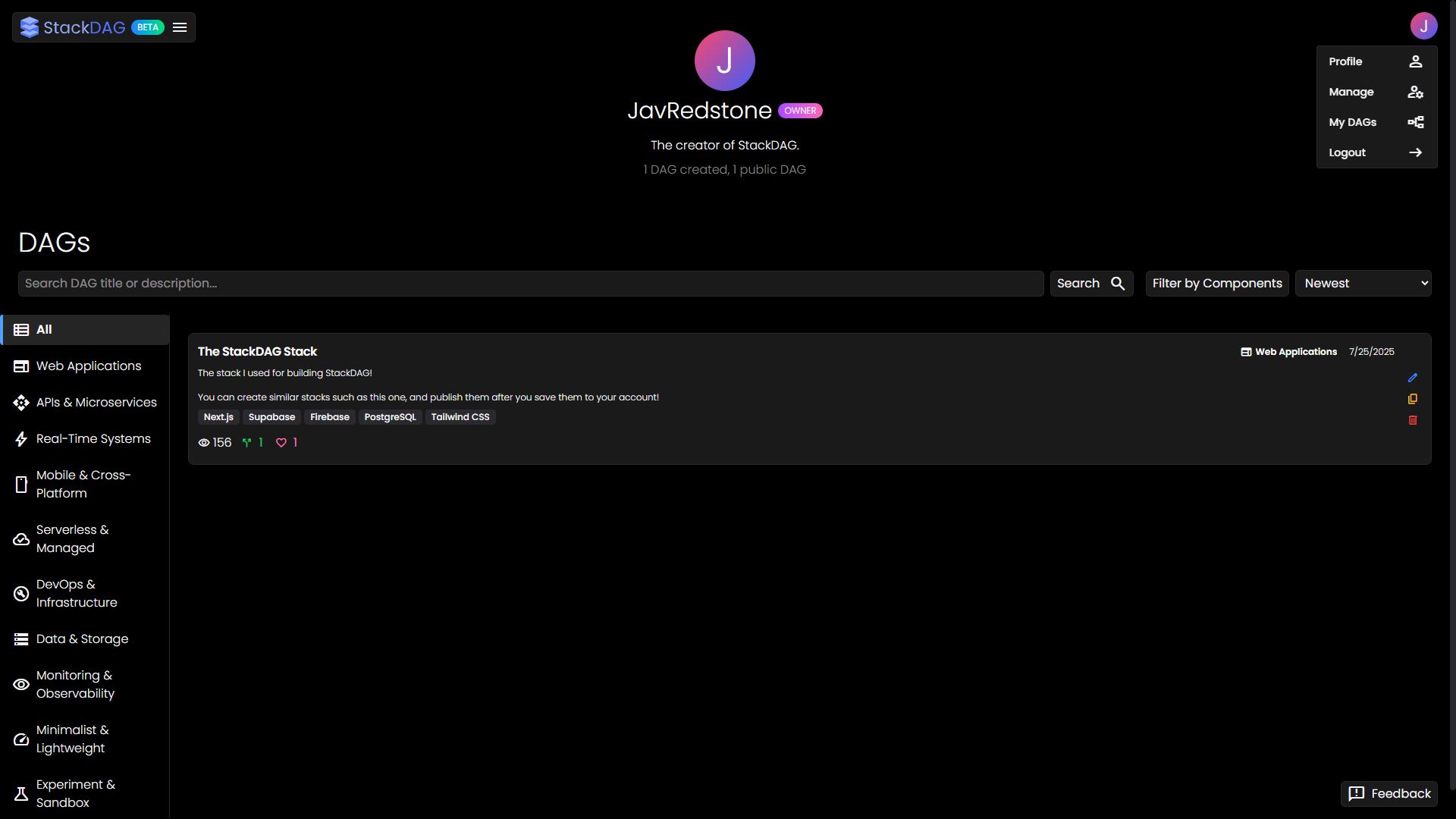
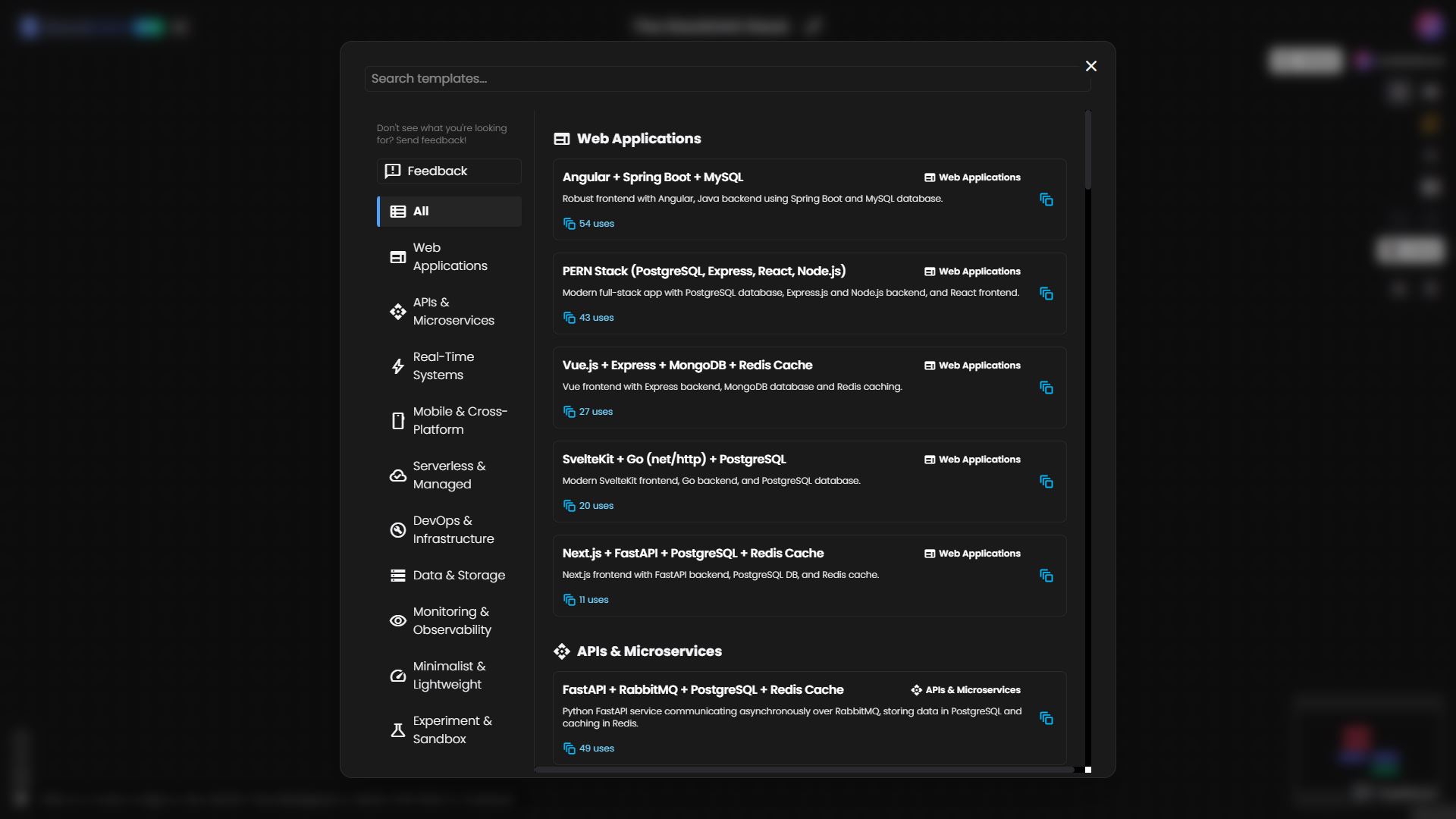
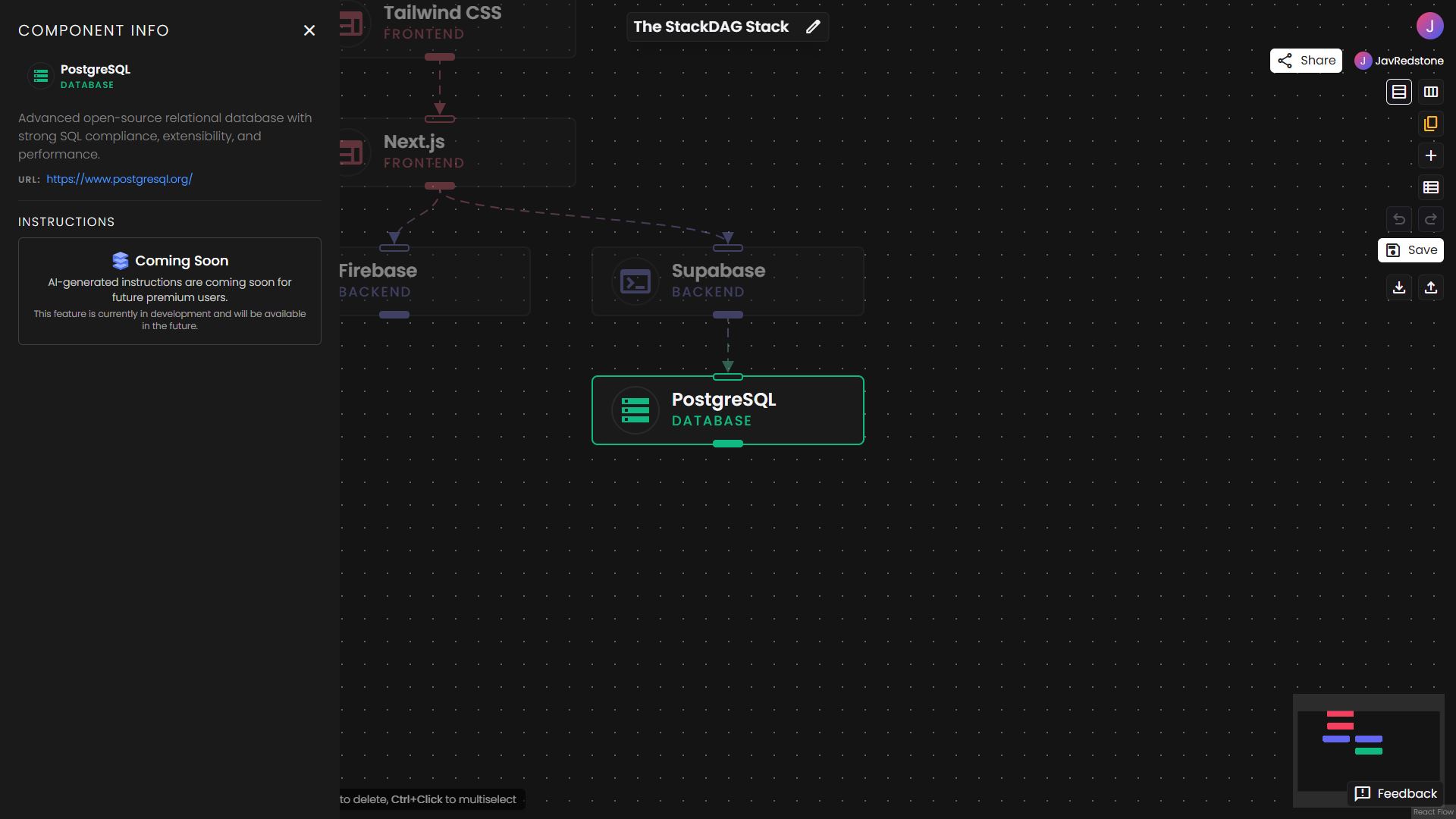
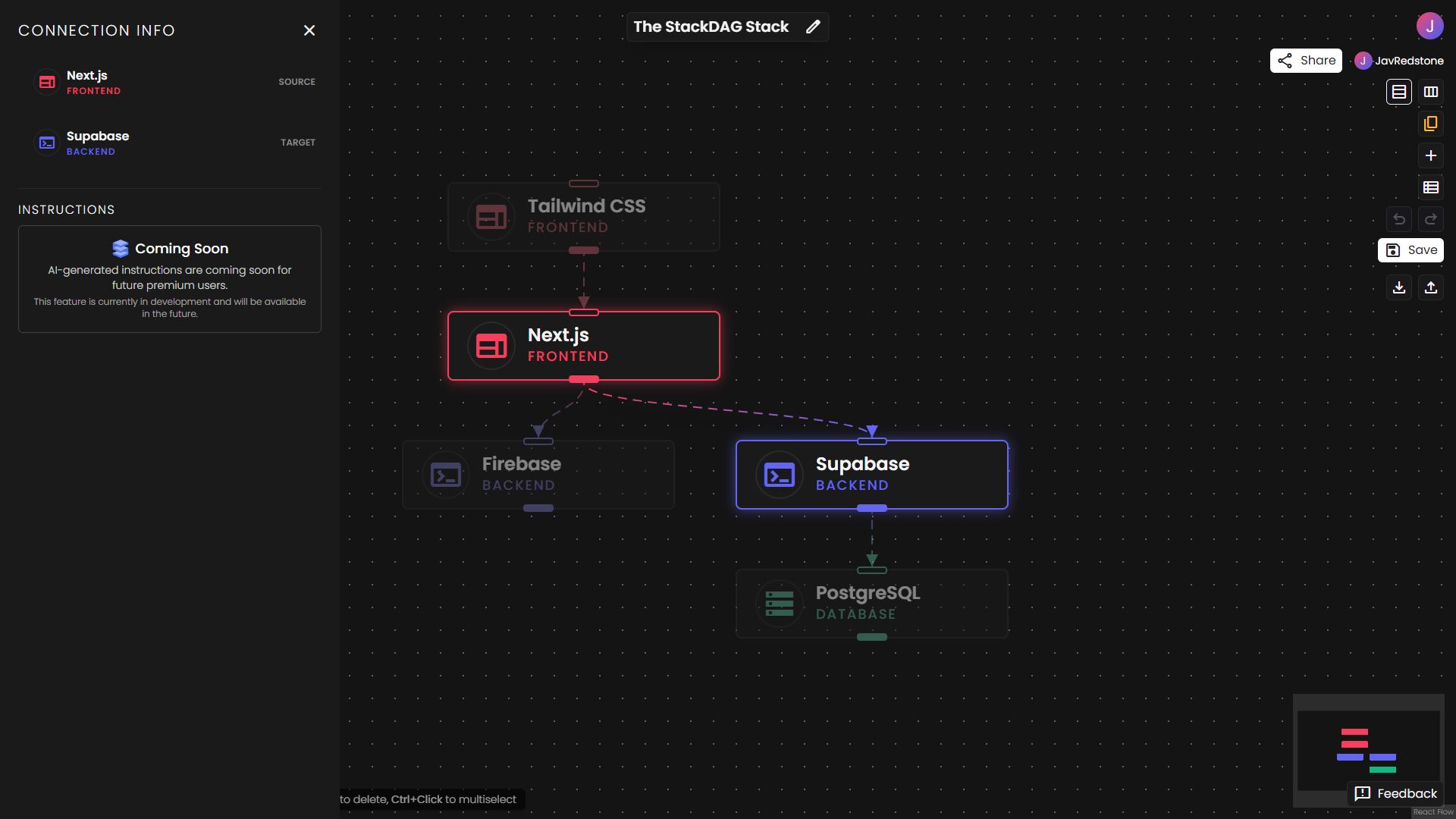
Designed and developed StackDAG, a full-stack AI-integrated web application built with Next.js (React), Firebase authentication, and a Supabase cloud PostgreSQL database with Supabase Edge Functions for REST request processing and API security.
Enables users to view, create, share, fork, and upvote Directed Acyclic Graphs (DAGs) representing technology stacks.
Integrated the OpenAI API to provide layer-by-layer setup and integration guidance for each DAG, with all DAGs and AI-generated instructions stored in Supabase for fast retrieval.
DOTA Aerial Object Detection using YOLOv11
August 2025  GitHub arrow_outward
GitHub arrow_outwardPythonYOLOPyTorchNumPyPandasMatplotlibOpenCVGoogle ColabGitGitHub
Developed an end-to-end deep learning aerial object detection pipeline using YOLOv11 Nano for the DOTA v1.5 dataset, focusing on preprocessing and data transformation for oriented bounding boxes.
Implemented image tiling (640×640 with padding for YOLO format) to preserve resolution and detail, translated and clamped OBB annotations to tile boundaries, converted polygons to YOLO-oriented format with normalized coordinates, and mapped class names to indices.
Trained and evaluated the YOLOv11 model on the processed dataset, producing detection visualizations, loss curves, and confusion matrices. Developed and documented my complete workflow and experimentation process in a Google Colab-hosted Jupyter Notebook.
HAM10000 Dataset Skin Lesion Classification using MobileNetV2
August 2025 GitHub arrow_outward
GitHub arrow_outwardPythonTensorFlowNumPyPandasMatplotlibGoogle ColabGitGitHub
Developed an end-to-end deep learning pipeline for multi-class skin lesion classification using the HAM10000 dataset, using transfer learning with MobileNetV2 as the backbone.
Addressed severe class imbalance through targeted data augmentation and stratified train/validation/test splits.
Evaluated model performance with accuracy, loss curves, and confusion matrix analysis to identify common misclassifications. Developed and documented the end-to-end workflow, challenges, and results in a Google Colab-hosted Jupyter Notebook.
Wellington Zone 1 Power Consumption Predictions
July 2025 GitHub arrow_outward
GitHub arrow_outwardPythonPandasNumPyscikit-learnMatplotlibAnacondaJupyter NotebookGitHub
Developed an end-to-end machine learning pipeline for Wellington Zone 1 Power Consumption Predictions using a Kaggle dataset of environmental and time series factors.
Performed feature engineering, model evaluation, and selected Ridge Regression, achieving an R² score of 0.9963 on the test set with 382 ms prediction time. Developed and documented my workflow and experimentation step-by-step in a Jupyter Notebook.
 Tourista
 Hack the North 2023
September 2023 GitHub arrow_outward
GitHub arrow_outwardSvelteSvelteKitTypeScriptFirebaseCohereGoogle MapsGitGitHubVisual Studio Code
Tourista is an AI-driven travel guide that offers personalized travel recommendations.
Integrated Cohere's AI API for intelligent location suggestions, Google Maps APIs for dynamic route mapping, and implemented Firebase authentication with clear, user-friendly messaging.
 FlexChat
 July 2023 – August 2023 GitHub arrow_outward
GitHub arrow_outwardAngularTypeScriptHugging FaceHugging Face TransformersGitHubVisual Studio Code
FlexChat is a platform for testing and comparing Hugging Face AI chatbot models.
Designed and developed the full-stack Angular application integrating Hugging Face APIs for model experimentation, with a user-friendly chat interface for creating, editing, and managing multiple chats to compare outputs from different models.